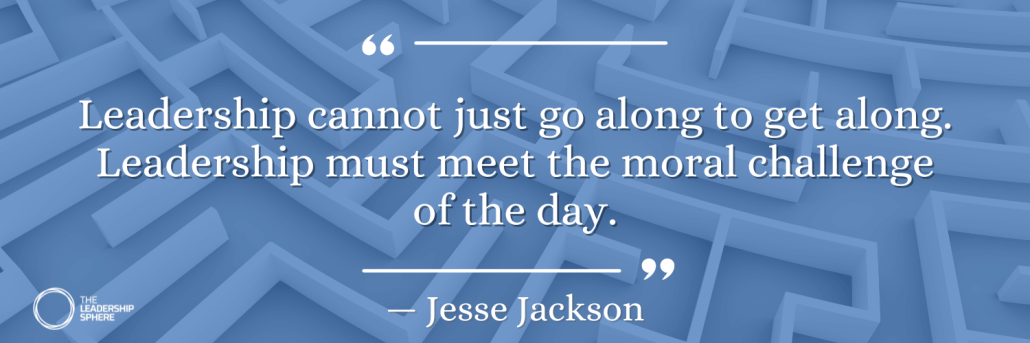
‘Emily’, a senior government official* overseeing public infrastructure projects, faced a choice that would define her career. A high-profile contract was on the table, promising to fast-track a critical public housing project. However, the contractor had a history of cutting corners on safety standards. Accepting the deal would mean meeting urgent housing needs but would compromise the safety-first ethos ‘Emily’s’ department was built upon.
She turned the contract down. The immediate fallout was tough, with stakeholders and the media questioning her judgment. Yet, within six months, her department secured partnerships with two highly reputable contractors who shared her commitment to safety and quality.
‘Emily’s’ decision was a prime example of a values based leadership approach in action.When the pressure mounts and the right path is obscured by competing interests, your core principles are your most reliable compass. Values based leadership is the practice of drawing on your deeply held principles to guide your decisions, influence your team, and build a resilient organisation. For executive leaders this method fosters authentic leadership and drives sustainable success.
Defining Values Based Leadership
At its core, a values based leadership approach strips away the superficial layers of management. It is not about adopting the latest corporate buzzword or mirroring the traits of high-profile billionaires. It is the active, daily commitment to lead from a place of integrity, authenticity, and purpose.
Traditional leadership models often rely on hierarchical power, where directives flow from the top down and compliance is the primary metric of success. Values driven leadership flips this script. It asks leaders to define what they stand for and to measure their success by how closely their actions align with those beliefs. When your team sees that your decisions are anchored in a consistent set of ethical standards, they do not just follow your orders. They trust your vision.
The Pillars of Authentic Leadership
To build a leadership style rooted in values, you need a strong foundation. Authentic leadership rests on four vital pillars.
Self-awareness
To lead from your values, you must first know what they are. Self-awareness requires deep self-reflection to understand your motivations, biases, and core principles. Many leaders use assessment and profiling tools to gain an objective view of their strengths and blind spots, providing a mirror to see how their internal values translate into external behaviour.
Congruence
Congruence means aligning what you say with what you do. For example, if you claim to value innovation but punish failed experiments, your actions lack congruence. Embodying your values daily builds trust and credibility, empowering your team to operate within those same ethical boundaries.
Transparency
A values-based approach requires open communication. Transparency is about explaining the ‘why’ behind your decisions, particularly the difficult ones. When ‘Emily’ declined the high-profile contract, she explained her reasoning in a department-wide meeting, turning a controversial decision into a unifying moment.
Consistency
The true test of leadership comes under pressure. Consistency means upholding your principles when budgets are tight, stakeholders are demanding, or a crisis occurs. When your team sees you remain steadfast, they learn that your values are not just for show, but are the bedrock of your leadership.
Benefits of Adopting a Values Based Leadership Style
For executive leaders, shifting to a values based framework offers profound, measurable benefits that extend far beyond a warm corporate sentiment.
First, it deeply enhances employee engagement and retention. People want to work for organisations that stand for something meaningful. When leaders act with integrity, employees feel proud of their workplace, reducing turnover and attracting top-tier talent.
Second, it improves decision-making and ethical conduct. A clear set of values acts as a filter for complex choices, streamlining the decision-making process and protecting the organisation from ethical missteps.
Furthermore, values driven leadership builds a stronger organisational culture and reputation. Clients, customers, and partners are increasingly discerning about who they do business with. Finally, this approach breeds immense resilience. During challenging times, a shared set of values keeps the team united and focused on the bigger picture.
Implementing Values Based Leadership: A Practical Guide
Transitioning to a values based leadership approach does not happen overnight. It is a deliberate practice that requires commitment and structure.
Step 1: Identifying and Articulating Core Values
Begin by defining your personal core values, followed by the values of your organisation. Write them down. They should be specific, actionable, and deeply meaningful. Opt for phrases that dictate behaviour, such as “we prioritise honesty over comfort.”
Step 2: Integrating Values into Daily Practices
Your values must be woven into the fabric of your organisation. This starts with hiring and onboarding. Evaluate candidates not just on their skills, but on their alignment with your core principles. Integrate these values into performance reviews, rewarding employees who demonstrate them. Ensure your strategic planning and goal-setting sessions are heavily influenced by your foundational beliefs.
Step 3: Developing Values Based Leadership Skills
Continuous development is essential. Investing in senior leadership training that focuses on ethical decision-making and empathy can transform your management team. Pair this with coaching and mentorship to ensure that your leaders have the support they need to navigate complex, values-driven dilemmas.
Step 4: Using Assessment and Profiling Tools Effectively
Finally, leverage data to support your growth. Utilise assessment and profiling tools to identify leadership gaps within your executive team. These insights allow you to personalise development plans, ensuring that every leader receives the specific guidance they need to align their leadership style with the organisation’s core values.
Leading with Purpose
A values based leadership approach is not always the easiest path. It requires vulnerability, rigorous self-reflection, and the courage to make unpopular decisions when necessary. Yet, as leaders like ‘Emily’ have discovered, it is the only path that generates authentic leadership, deep trust, and lasting organisational success.
Take a moment this week to reflect on your own core values. Are your daily decisions reflecting those principles? Consider integrating assessment and profiling into your own development to ensure you are leading with true congruence. By committing to this purpose-driven approach, you will not only build a more resilient organisation, but a legacy you can be genuinely proud of.
https://theleadershipsphere.com.au/wp-content/uploads/2026/04/2603_005-Article.png10801920Philliphttps://theleadershipsphere.com.au/wp-content/uploads/2021/09/TLS_Blue-Grey-Horizontal-300x124-fix.pngPhillip2026-04-02 08:00:352026-03-31 13:10:34What is a Values Based Leadership Approach?
What is a Values Based Leadership Approach?'Emily', a…
https://theleadershipsphere.com.au/wp-content/uploads/2026/04/2603_005-Article.png10801920Philliphttps://theleadershipsphere.com.au/wp-content/uploads/2021/09/TLS_Blue-Grey-Horizontal-300x124-fix.pngPhillip2026-04-02 08:00:352026-03-31 13:10:34What is a Values Based Leadership Approach?
HBDI® vs DiSC: Choosing the Right Personality AssessmentLeading…
https://theleadershipsphere.com.au/wp-content/uploads/2026/03/2603_005-Blog.png10801920Philliphttps://theleadershipsphere.com.au/wp-content/uploads/2021/09/TLS_Blue-Grey-Horizontal-300x124-fix.pngPhillip2026-03-31 08:00:552026-03-30 15:19:31HBDI® vs DiSC: Choosing the Right Personality Assessment
What Makes an Effective Team in the Workplace?Every organisation…
https://theleadershipsphere.com.au/wp-content/uploads/2021/09/TLS_Blue-Grey-Horizontal-300x124-fix.png00Philliphttps://theleadershipsphere.com.au/wp-content/uploads/2021/09/TLS_Blue-Grey-Horizontal-300x124-fix.pngPhillip2026-03-23 08:00:222026-03-23 15:24:48What Makes an Effective Team in the Workplace?
What is a Values Based Leadership Approach?'Emily', a…
https://theleadershipsphere.com.au/wp-content/uploads/2026/04/2603_005-Article.png10801920Philliphttps://theleadershipsphere.com.au/wp-content/uploads/2021/09/TLS_Blue-Grey-Horizontal-300x124-fix.pngPhillip2026-04-02 08:00:352026-03-31 13:10:34What is a Values Based Leadership Approach?
HBDI® vs DiSC: Choosing the Right Personality AssessmentLeading…
https://theleadershipsphere.com.au/wp-content/uploads/2026/03/2603_005-Blog.png10801920Philliphttps://theleadershipsphere.com.au/wp-content/uploads/2021/09/TLS_Blue-Grey-Horizontal-300x124-fix.pngPhillip2026-03-31 08:00:552026-03-30 15:19:31HBDI® vs DiSC: Choosing the Right Personality Assessment
What Makes an Effective Team in the Workplace?Every organisation…
https://theleadershipsphere.com.au/wp-content/uploads/2021/09/TLS_Blue-Grey-Horizontal-300x124-fix.png00Philliphttps://theleadershipsphere.com.au/wp-content/uploads/2021/09/TLS_Blue-Grey-Horizontal-300x124-fix.pngPhillip2026-03-23 08:00:222026-03-23 15:24:48What Makes an Effective Team in the Workplace?


 https://theleadershipsphere.com.au/wp-content/uploads/2026/03/2603_004-Article.png
1080
1920
Phillip
https://theleadershipsphere.com.au/wp-content/uploads/2021/09/TLS_Blue-Grey-Horizontal-300x124-fix.png
Phillip2026-03-26 08:00:002026-03-31 11:59:08How to Successfully Implement Values Driven Leadership
https://theleadershipsphere.com.au/wp-content/uploads/2026/03/2603_004-Article.png
1080
1920
Phillip
https://theleadershipsphere.com.au/wp-content/uploads/2021/09/TLS_Blue-Grey-Horizontal-300x124-fix.png
Phillip2026-03-26 08:00:002026-03-31 11:59:08How to Successfully Implement Values Driven Leadership