Designing Better Conditions for Team PerformanceBehind…
https://theleadershipsphere.com.au/wp-content/uploads/2026/09/2609_004-Article-scaled.jpg17072560Phillip Ralphhttps://theleadershipsphere.com.au/wp-content/uploads/2021/09/TLS_Blue-Grey-Horizontal-300x124-fix.pngPhillip Ralph2026-09-24 08:00:312026-09-30 13:43:52Designing Better Conditions for Team Performance
Transform Performance with a Culture of Accountability
Transform Performance with a Culture of Accountability
Every leader knows the frustration of a stalled project. You hire brilliant minds, set clear objectives, and provide the necessary tools. Yet, deadlines slip and the quality of work falters. What is missing? Often, it comes down to a fundamental misunderstanding of accountability within the organisational culture. We tend to view accountability as a checklist or a manager looking over our shoulder. It is time to rethink this approach.
Creating high performing teams requires more than just assigning tasks. It demands a shift from external compliance to deep, intrinsic ownership. In this post, we will explore how you can cultivate this mindset within your organisation. You will learn how to build trust, empower your team, and implement effective methods for fostering a culture of strategic accountability. By the end of this read, you will have a clear blueprint for transforming your leadership style and elevating your entire workforce.
When we hear the word accountability, we usually think of reporting structures. We picture performance reviews, weekly check-ins, and project management dashboards. Let us be clear: accountability from external sources is useful and often necessary. It sets baselines, ensures alignment, and helps keep track of complex deliverables. External structures provide the scaffolding that keeps an organisation running smoothly and efficiently.
However, relying entirely on top-down enforcement creates a ceiling on performance. If your team only delivers because a manager is watching, they will only ever do what is strictly required to avoid negative consequences. External pressure can drive compliance, but it rarely inspires greatness. To truly unlock the potential of your workforce, you must move beyond the scaffolding and focus on the internal drive of the individuals doing the work. People need a reason to care that goes beyond their monthly salary or fear of reprimand.
The Shift to Ownership: Intrinsic Motivation for Excellence
The magic happens when accountability evolves into ownership. Ownership means that an individual is intrinsically motivated to perform with excellence. They do not just complete a task to tick a box; they take pride in the outcome and care deeply about the success of the project. This intrinsic motivation is a far greater driver of high-quality work than any external reward or punishment.
When a person feels a sense of ownership, they anticipate problems before they arise. They innovate, collaborate, and push boundaries without needing explicit permission. Fostering this level of engagement is the ultimate goal of high performance team training. It shifts the dynamic from a manager pushing a team forward to a team pulling the manager along with their momentum. This shift completely transforms your organisational culture, creating an environment where excellence is the standard, not the exception.
Furthermore, intrinsic motivation breeds resilience. When setbacks occur—and they always do—a team that owns their work will not sit back and wait for someone else to fix the problem. They will roll up their sleeves and find a solution, because the project’s success is a reflection of their personal professional standards.
Building Trust: A Cornerstone of Ownership
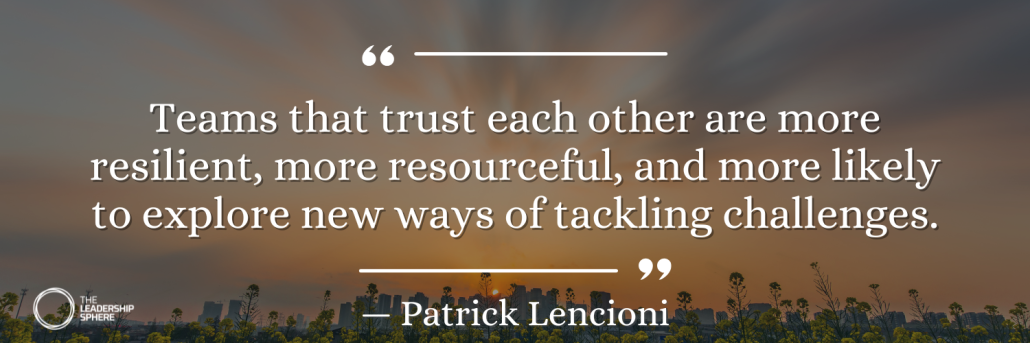
You cannot mandate ownership. You have to nurture it, and the soil in which it grows is trust. A key tenet of ownership is trust from leadership in the skills, knowledge, and capabilities of their teams. If you want people to act like owners, you must treat them like owners.
Micromanagement is the quickest way to kill intrinsic motivation. When leaders constantly second-guess decisions, hover over desks, or demand updates on minor details, they send a clear message: “I do not trust you to do your job.” This breeds resentment and forces employees back into a mindset of mere compliance.
Instead, leaders must step back. Provide the vision, outline the boundaries, and then get out of the way. Trusting your team to navigate the challenges demonstrates respect. When people feel respected and trusted, their natural response is to rise to the occasion and prove that the trust was well-placed. This does not mean abandoning your team to figure everything out alone; rather, it means being available for support while allowing them to steer the ship.
Strategic Accountability Framework: Implementation and Best Practices
Transitioning to a culture of ownership requires structure. You cannot simply remove oversight and hope for the best. Instead, you need a strategic accountability framework. This framework bridges the gap between leadership expectations and team execution, ensuring that autonomy does not devolve into chaos.
There are several effective methods for fostering a culture of strategic accountability:
Define clear outcomes, not just processes: Tell your team what success looks like, but let them figure out how to get there. This gives them the autonomy necessary for ownership, while ensuring the final deliverable meets the business need.
Provide the right resources: A team cannot take ownership if they lack the tools, time, or budget to succeed. Set them up for success from day one by having honest conversations about what they need to execute the vision.
Establish peer-to-peer accountability: The most robust high performing teams do not rely solely on the manager for accountability. They hold each other to high standards because they are collectively committed to the goal. In remote or hybrid environments, this looks like transparent communication channels where team members openly share progress and ask each other for help.
Normalise failure as a learning tool: If people are terrified of making mistakes, they will never take risks. A true culture of ownership requires psychological safety, where failures are reviewed objectively to improve future performance rather than to assign blame.
Senior Leadership Development: Cultivating a Culture of Ownership
The shift towards this new framework must start at the top. Senior leadership development is crucial for this transition. Leaders often struggle to let go of control. They reached their positions by being exceptional problem solvers, and stepping back to let others solve the problems can feel deeply counterintuitive.
Investing in senior leadership development helps managers transition from directors to coaches. Through targeted coaching and self-reflection, leaders learn how to ask guiding questions rather than providing immediate answers. They discover how to support their team’s professional growth and how to hold space for their employees to take the lead in meetings and project planning.
When leaders model vulnerability, trust, and a commitment to intrinsic motivation, the rest of the organisation quickly follows suit. A leader who admits a mistake and course-corrects openly gives their team permission to do the same, fostering a healthier, more dynamic workplace.
Measuring Success: KPIs for a Culture of Accountability
How do you know if your strategic accountability framework is working? Measuring a cultural shift can be challenging, but there are clear, observable indicators of success that go beyond traditional output metrics.
First, look at the nature of the problems brought to your desk. Are employees coming to you for permission to act, or are they presenting solutions they have already initiated? A reduction in bottlenecks at the management level is a prime indicator that ownership is taking root.
Track the velocity of decision-making. In a culture of ownership, decisions are made faster because employees do not have to wait for multiple layers of approval for everyday operational choices. You can also monitor the tone of team meetings. Are people actively challenging ideas and offering constructive feedback, or are they simply nodding along?
Additionally, monitor employee engagement and retention metrics. People who feel trusted and empowered are far less likely to leave your organisation. They are invested in the journey, eager to see the results of their hard work, and motivated by the trust you have placed in them.
Sustaining High Performance Through Ownership and Trust
Transforming performance is not a one-off event; it is a continuous, rewarding journey. By recognising the limits of external pressure and embracing the immense power of intrinsic motivation, you can fundamentally change how your organisation operates. Build a firm foundation of trust, implement a robust strategic accountability framework, and commit to ongoing leadership development to support your managers through the change.
When you empower your people to truly own their work, you stop managing tasks and start leading a movement. The results will speak for themselves in the quality of work, the speed of delivery, and the morale of your team.
Transform Performance with a Culture of Accountability
https://theleadershipsphere.com.au/wp-content/uploads/2026/05/2605_003-Article.png10801920Phillip Ralphhttps://theleadershipsphere.com.au/wp-content/uploads/2021/09/TLS_Blue-Grey-Horizontal-300x124-fix.pngPhillip Ralph2026-05-21 08:00:442026-05-22 12:20:05Transform Performance with a Culture of Accountability
Why Teams Revert to Old Habits: The Root CauseMost change…
https://theleadershipsphere.com.au/wp-content/uploads/2026/10/2610_001-Article-scaled.jpg14402560Phillip Ralphhttps://theleadershipsphere.com.au/wp-content/uploads/2021/09/TLS_Blue-Grey-Horizontal-300x124-fix.pngPhillip Ralph2026-10-01 08:00:412026-10-01 15:26:47Why Teams Revert to Old Habits: The Root Cause
Designing Better Conditions for Team PerformanceBehind…
https://theleadershipsphere.com.au/wp-content/uploads/2026/09/2609_004-Article-scaled.jpg17072560Phillip Ralphhttps://theleadershipsphere.com.au/wp-content/uploads/2021/09/TLS_Blue-Grey-Horizontal-300x124-fix.pngPhillip Ralph2026-09-24 08:00:312026-09-30 13:43:52Designing Better Conditions for Team Performance
Why Teams Revert to Old Habits: The Root CauseMost change…
https://theleadershipsphere.com.au/wp-content/uploads/2026/10/2610_001-Article-scaled.jpg14402560Phillip Ralphhttps://theleadershipsphere.com.au/wp-content/uploads/2021/09/TLS_Blue-Grey-Horizontal-300x124-fix.pngPhillip Ralph2026-10-01 08:00:412026-10-01 15:26:47Why Teams Revert to Old Habits: The Root Cause
Designing Better Conditions for Team PerformanceBehind…
https://theleadershipsphere.com.au/wp-content/uploads/2026/09/2609_004-Article-scaled.jpg17072560Phillip Ralphhttps://theleadershipsphere.com.au/wp-content/uploads/2021/09/TLS_Blue-Grey-Horizontal-300x124-fix.pngPhillip Ralph2026-09-24 08:00:312026-09-30 13:43:52Designing Better Conditions for Team Performance


 https://theleadershipsphere.com.au/wp-content/uploads/2026/09/2609_004-Article-scaled.jpg
1707
2560
Phillip Ralph
https://theleadershipsphere.com.au/wp-content/uploads/2021/09/TLS_Blue-Grey-Horizontal-300x124-fix.png
Phillip Ralph2026-09-24 08:00:312026-09-30 13:43:52Designing Better Conditions for Team Performance
https://theleadershipsphere.com.au/wp-content/uploads/2026/09/2609_004-Article-scaled.jpg
1707
2560
Phillip Ralph
https://theleadershipsphere.com.au/wp-content/uploads/2021/09/TLS_Blue-Grey-Horizontal-300x124-fix.png
Phillip Ralph2026-09-24 08:00:312026-09-30 13:43:52Designing Better Conditions for Team Performance