Blog title here

How to Diagnose Team Performance Gaps: People vs. System
How to Diagnose Team Performance Gaps: People vs. SystemTo…


There’s a particular kind of exhaustion that comes from watching a talented team spin its wheels. Not from lack of effort or skill, but from nobody being quite sure who’s meant to make the call. Deadlines slip. The same mistake happens twice. Your best people start picking up the slack, quietly, until they don’t anymore.
This is the hidden cost of unclear ownership, and it’s more common in high-performing organisations than most leaders would like to admit. It doesn’t announce itself as a crisis. It shows up as friction: the meeting that runs long because three people think they own the decision, the project that stalls because nobody wants to be the one who moves first without cover.
The good news is that this problem is entirely solvable. It starts with understanding where ambiguity creeps in, what it actually costs a business, and how leadership assessment and profiling can help executives close the gap before it becomes cultural.
It can be tempting to jump in when you see a task going off track. Afterall, you have the experience and insight to catch potential derailers faster than others in your team. But in doing so, you deprive them of the opportunity to learn to spot these things themselves and it signals to the team that ownership isn’t real. Why commit to a decision if a more senior voice will simply override it?
Over time, this erodes initiative. And in the end they lose confidence in their ability and wait for direction from you instead of taking responsibility for the outcomes. Meanwhile you’re still stretched thin because decisions that should have been taken off of your plate, haven’t been.
The second pattern is subtler but just as damaging: ownership that only becomes visible in hindsight. Nobody is asked who owns a project until it fails, at which point everyone is suddenly very clear on who should have been accountable.
This reactive model of accountability creates a culture of caution rather than confidence. People learn that visibility is risky, so they keep their heads down and avoid decisions that might later be traced back to them. Proactive role clarity (when defined before the work starts, not after it goes sideways) is what separates high-performing teams from those stuck in a defensive crouch.

Ambiguous decision rights are a quieter driver of the same problem. When it’s unclear who has the authority to approve a budget, greenlight a change, or sign off on a client commitment, work grinds to a halt while people seek informal permission. This is what Harvard Business Review refers to as execution drag: the slow leak of momentum caused by unclear decision rights across a team.
Underlying all three of these causes is often a simpler issue: leaders haven’t been properly assessed for their ability to delegate and clarify roles. Many managers are promoted for technical skill or tenure, not for their capacity to build accountable teams. Without structured leadership assessment and profiling, these gaps go unnoticed until they show up in performance data or, worse, in resignation letters.
When accountability isn’t anchored to a named owner, mistakes tend to repeat. Nobody feels fully responsible for fixing the root cause, so teams treat symptoms instead. The same process breaks down, the same handoff gets missed, and the same clarifying conversation happens again next quarter.
Perhaps the most costly consequence is what happens to your best people. In the absence of clear ownership, high performers tend to fill the gap themselves. They pick up the slack because they care about the outcome, not because it’s their job. This might work for a while, but it’s not sustainable. Overcompensation leads to exhaustion, resentment, and eventually, attrition—often among the very people an organisation can least afford to lose.
This isn’t just anecdotal. Gallup links low role clarity and poor manager effectiveness to lower engagement and productivity outcomes across teams. When people don’t know what’s expected of them or where their authority begins and ends, they disengage because ambiguity is demoralising.
As mentioned, Harvard Business Review has repeatedly shown that when decision rights are unclear, it creates execution drag across teams. The effect compounds: slower decisions lead to slower delivery, which leads to more firefighting, which leaves even less time to fix the structural issue causing the drag in the first place.
This dynamic shows up clearly in Australian workplaces, where capable people often underperform because they’re operating inside a system that has taught them not to move without cover. Cultural norms around consensus and hierarchy can be healthy in moderation, but they can also mask accountability gaps. When “checking in” becomes a default rather than a genuine need, it’s usually a sign that ownership hasn’t been clearly assigned in the first place.
This is a structural problem, not a capability one. Talented professionals adapt to the systems they’re placed in, and if that system rewards caution over ownership, that’s exactly what you’ll get.
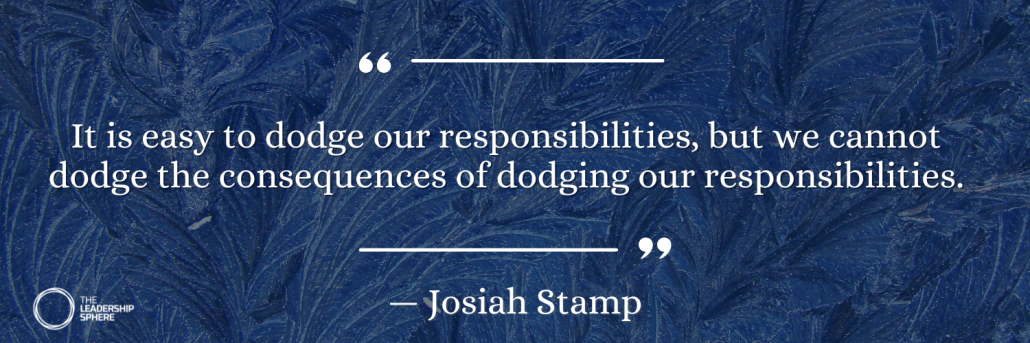
Start with the basics: who owns which decisions, and who owns which outcomes. This should be explicit, documented, and revisited regularly; not assumed based on job title or tenure.
Understanding whether your leaders are equipped to delegate effectively requires more than a gut feeling. The best tools for leadership team assessment and development programs give executives a clear, evidence-based view of where managers excel and where they need support; particularly around clarifying roles and stepping back at the right moments.
So, what are the essential qualities of an effective high-performance team leader? Transparency, clear communication, and confident decision-making sit at the core. Leaders who can articulate not just what needs to happen, but who is responsible for making it happen, build teams that move faster and trust each other more.
Accountability shouldn’t only surface in a crisis. Build frameworks that reinforce ownership on an ongoing basis. This looks like regular check-ins on decision rights, clear escalation paths, and consistent recognition of people who take ownership well.
Finally, treat leadership team assessment and development as an ongoing investment, not a one-off exercise. Regular profiling ensures your leaders continue building the leadership skills to develop team performance as the organisation grows and its challenges evolve.
Unclear ownership isn’t a sign that your team lacks capability. It’s a sign that leadership hasn’t yet built the structures needed to make accountability visible, consistent, and proactive. The fix isn’t complicated, but it does require honesty about where the gaps are.
Start by asking a simple question: if something went wrong on your team tomorrow, would everyone agree on who was responsible before it happened, not after? If the answer isn’t an immediate yes, that’s where the work begins. Not with your team, but with a clear-eyed assessment of your own leadership effectiveness.
 https://theleadershipsphere.com.au/wp-content/uploads/2026/10/2610_004-Blog.png
1080
1920
Phillip Ralph
https://theleadershipsphere.com.au/wp-content/uploads/2021/09/TLS_Blue-Grey-Horizontal-300x124-fix.png
Phillip Ralph2026-10-20 08:00:202026-10-21 17:26:29Why Strategy Fails at the Execution Stage
https://theleadershipsphere.com.au/wp-content/uploads/2026/10/2610_004-Blog.png
1080
1920
Phillip Ralph
https://theleadershipsphere.com.au/wp-content/uploads/2021/09/TLS_Blue-Grey-Horizontal-300x124-fix.png
Phillip Ralph2026-10-20 08:00:202026-10-21 17:26:29Why Strategy Fails at the Execution Stage https://theleadershipsphere.com.au/wp-content/uploads/2026/10/2610_003-Article-scaled.jpg
1707
2560
Phillip Ralph
https://theleadershipsphere.com.au/wp-content/uploads/2021/09/TLS_Blue-Grey-Horizontal-300x124-fix.png
Phillip Ralph2026-10-15 08:00:512026-10-16 09:49:25Transforming Leadership Challenges into Opportunities
https://theleadershipsphere.com.au/wp-content/uploads/2026/10/2610_003-Article-scaled.jpg
1707
2560
Phillip Ralph
https://theleadershipsphere.com.au/wp-content/uploads/2021/09/TLS_Blue-Grey-Horizontal-300x124-fix.png
Phillip Ralph2026-10-15 08:00:512026-10-16 09:49:25Transforming Leadership Challenges into Opportunities https://theleadershipsphere.com.au/wp-content/uploads/2021/09/TLS_Blue-Grey-Horizontal-300x124-fix.png
0
0
Phillip Ralph
https://theleadershipsphere.com.au/wp-content/uploads/2021/09/TLS_Blue-Grey-Horizontal-300x124-fix.png
Phillip Ralph2026-10-13 08:00:092026-10-14 15:03:56How to Diagnose Team Performance Gaps: People vs. System
https://theleadershipsphere.com.au/wp-content/uploads/2026/10/2610_002-Article-scaled.jpg
1707
2560
Phillip Ralph
https://theleadershipsphere.com.au/wp-content/uploads/2021/09/TLS_Blue-Grey-Horizontal-300x124-fix.png
Phillip Ralph2026-10-08 08:00:002026-10-15 11:35:51Why Capable Teams Still Depend on Their Leaders
https://theleadershipsphere.com.au/wp-content/uploads/2026/10/2610_004-Blog.png
1080
1920
Phillip Ralph
https://theleadershipsphere.com.au/wp-content/uploads/2021/09/TLS_Blue-Grey-Horizontal-300x124-fix.png
Phillip Ralph2026-10-20 08:00:202026-10-21 17:26:29Why Strategy Fails at the Execution Stage
https://theleadershipsphere.com.au/wp-content/uploads/2026/10/2610_003-Article-scaled.jpg
1707
2560
Phillip Ralph
https://theleadershipsphere.com.au/wp-content/uploads/2021/09/TLS_Blue-Grey-Horizontal-300x124-fix.png
Phillip Ralph2026-10-15 08:00:512026-10-16 09:49:25Transforming Leadership Challenges into Opportunities
https://theleadershipsphere.com.au/wp-content/uploads/2021/09/TLS_Blue-Grey-Horizontal-300x124-fix.png
0
0
Phillip Ralph
https://theleadershipsphere.com.au/wp-content/uploads/2021/09/TLS_Blue-Grey-Horizontal-300x124-fix.png
Phillip Ralph2026-10-13 08:00:092026-10-14 15:03:56How to Diagnose Team Performance Gaps: People vs. System
https://theleadershipsphere.com.au/wp-content/uploads/2026/10/2610_002-Article-scaled.jpg
1707
2560
Phillip Ralph
https://theleadershipsphere.com.au/wp-content/uploads/2021/09/TLS_Blue-Grey-Horizontal-300x124-fix.png
Phillip Ralph2026-10-08 08:00:002026-10-15 11:35:51Why Capable Teams Still Depend on Their Leaders
https://theleadershipsphere.com.au/wp-content/uploads/2021/09/TLS_Blue-Grey-Horizontal-300x124-fix.png
0
0
Phillip Ralph
https://theleadershipsphere.com.au/wp-content/uploads/2021/09/TLS_Blue-Grey-Horizontal-300x124-fix.png
Phillip Ralph2026-10-13 08:00:092026-10-14 15:03:56How to Diagnose Team Performance Gaps: People vs. System
https://theleadershipsphere.com.au/wp-content/uploads/2026/10/2610_002-Article-scaled.jpg
1707
2560
Phillip Ralph
https://theleadershipsphere.com.au/wp-content/uploads/2021/09/TLS_Blue-Grey-Horizontal-300x124-fix.png
Phillip Ralph2026-10-08 08:00:002026-10-15 11:35:51Why Capable Teams Still Depend on Their Leaders
https://theleadershipsphere.com.au/wp-content/uploads/2026/10/2610_004-Blog.png
1080
1920
Phillip Ralph
https://theleadershipsphere.com.au/wp-content/uploads/2021/09/TLS_Blue-Grey-Horizontal-300x124-fix.png
Phillip Ralph2026-10-20 08:00:202026-10-21 17:26:29Why Strategy Fails at the Execution Stage
https://theleadershipsphere.com.au/wp-content/uploads/2026/10/2610_003-Article-scaled.jpg
1707
2560
Phillip Ralph
https://theleadershipsphere.com.au/wp-content/uploads/2021/09/TLS_Blue-Grey-Horizontal-300x124-fix.png
Phillip Ralph2026-10-15 08:00:512026-10-16 09:49:25Transforming Leadership Challenges into Opportunities
https://theleadershipsphere.com.au/wp-content/uploads/2021/09/TLS_Blue-Grey-Horizontal-300x124-fix.png
0
0
Phillip Ralph
https://theleadershipsphere.com.au/wp-content/uploads/2021/09/TLS_Blue-Grey-Horizontal-300x124-fix.png
Phillip Ralph2026-10-13 08:00:092026-10-14 15:03:56How to Diagnose Team Performance Gaps: People vs. System
https://theleadershipsphere.com.au/wp-content/uploads/2026/10/2610_002-Article-scaled.jpg
1707
2560
Phillip Ralph
https://theleadershipsphere.com.au/wp-content/uploads/2021/09/TLS_Blue-Grey-Horizontal-300x124-fix.png
Phillip Ralph2026-10-08 08:00:002026-10-15 11:35:51Why Capable Teams Still Depend on Their Leaders