Blog title here

How to Diagnose Team Performance Gaps: People vs. System
How to Diagnose Team Performance Gaps: People vs. SystemTo…


Every day presents us with a barrage of choices. Some are trivial, while others carry the weight to shape our careers, our businesses, and our lives. When faced with complex problems, we often look outward for frameworks, data, or advice to guide our next steps. Yet, the most reliable compass you possess is already within you. It is built upon your core values.

Values based decision making is the practice of aligning your choices with the fundamental beliefs that matter most to you or your organisation. When you use these principles as a baseline, the noise fades. You gain a clear framework that simplifies complex dilemmas and leads to greater long-term fulfilment.
By understanding how to embed company values into daily operations and personal routines, you can cultivate a more purposeful environment, inspire your teams, and consistently make better decisions.
Before you can use your values as a guide, you must clearly define them. This process requires honesty and dedicated reflection, both on a personal and organisational level.
Personal values are the fundamental beliefs that dictate your behaviour and guide your choices. To uncover them, you can engage in self-reflection exercises and journaling. Ask yourself when you felt most proud, most fulfilled, or most frustrated. Often, frustration arises when a core value is compromised. By mapping out these moments, you can isolate the principles such as integrity, creativity, or independence, that are non-negotiable for you. Once identified, these personal values act as a filter for your daily choices, helping you say yes to the right opportunities and no to distractions.
Organisational values serve the same purpose on a macro scale. A company without clearly articulated values relies on guesswork, which leads to inconsistent behaviour and culture. It is crucial for businesses to identify and articulate their core principles collaboratively. These should not be aspirational buzzwords plastered on a wall; they must reflect the actual behaviour expected of everyone in the business. Knowing how to embed company values into daily operations starts with defining them clearly so every team member understands what is expected.
When values are clearly defined, they function as a dependable compass. They remove the emotional turbulence from difficult situations.
If transparency is a core value, the decision of whether to share bad news with a client is already made. You share it. By relying on this compass, you avoid the anxiety of value conflicts and ensure your choices are completely aligned with your identity.
Real-world examples of this happen every day. A professional might decline a lucrative job offer because it requires excessive travel, clashing with their core value of family time. In business, a retail company might pull a popular product from its shelves after discovering the supplier engages in unethical labour practices. The short-term financial hit is offset by the long-term protection of the brand’s integrity.
A value is only useful if it is actively lived. Translating abstract concepts into daily actions requires deliberate effort.
Incorporate your values into your daily routine by setting specific intentions each morning. If your core value is growth, dedicate twenty minutes a day to learning a new skill. Use your values as a strict filter for opportunities. When a new project arises, ask yourself if it supports your foundational beliefs. If it does not, you have a clear rationale to politely decline.
Leaders must model the behaviour they wish to see. If leaders do not embody the company values, employees will quickly view those values as hypocritical. This is where senior leadership development becomes essential. Leaders must be trained to navigate complex business challenges while staying true to the company’s ethos.
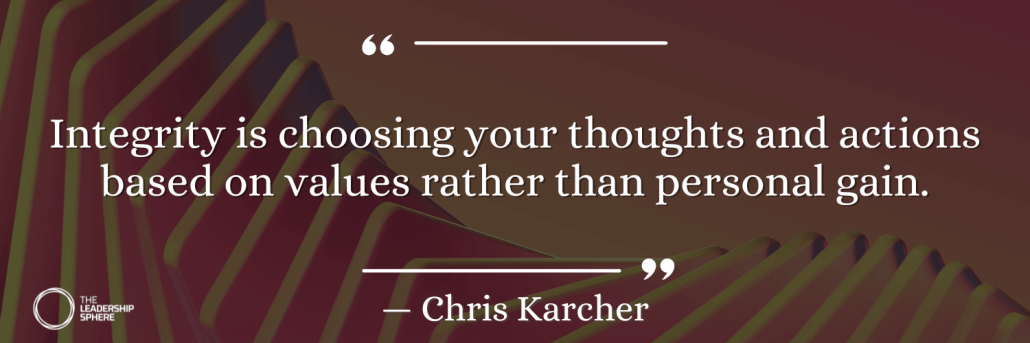
Organisations should integrate values into every touchpoint of the employee lifecycle. Hire candidates based on value alignment, not just technical skill. Structure performance reviews to reward employees who demonstrate company principles. For many firms, engaging in executive coaching is a vital step to ensure the leadership team knows how to weave these principles through the fabric of the business. This commitment to values driven leadership transforms abstract ideas into measurable daily habits.
Organisations that operate with a clear sense of purpose enjoy a significant strategic advantage. Employees want to work for companies that stand for something beyond profit. When leadership decisions are transparently based on shared values, trust increases. This leads to higher employee engagement and substantially better retention rates.
Achieving this level of alignment is not always easy, particularly for established businesses undergoing a transition. In these instances, consultants specialising in purpose-led organisational change can provide invaluable outside perspective. They help realign fragmented teams and build systems that support ethical decision making. Furthermore, investing in executive leadership training ensures that the managers responsible for steering the ship have the tools they need to communicate and enforce these values effectively.
Living your values is straightforward when everything is going well. The true test comes during moments of crisis or conflict.
You will inevitably face situations where two core values clash. For instance, you might value both honesty and compassion. If a colleague asks for feedback on a subpar presentation, you must balance the truth with empathy. In these cases, it helps to prioritise your values contextually, asking which principle serves the greater good in that specific moment.
External pressures also present significant challenges. Market demands, stakeholder expectations, and financial targets can tempt leaders to compromise their principles for a quick win. Navigating these pressures requires resilience and a steadfast commitment to the long-term vision. Remember that a compromised value takes years to rebuild, whereas a missed short-term target is often a temporary setback.
Aligning your decisions with your values does more than simplify your life; it builds a foundation of authenticity and trust. For individuals, this practice leads to a deeply fulfilling career and personal life. For organisations, it creates a resilient, highly engaged culture capable of weathering complex business challenges.
Take the time this week to review your core principles. Are your daily actions reflecting what you truly care about? By deliberately choosing to live your values, you take the most important step toward a purposeful life and a successful, resilient organisation.
 https://theleadershipsphere.com.au/wp-content/uploads/2026/10/2610_004-Blog.png
1080
1920
Phillip Ralph
https://theleadershipsphere.com.au/wp-content/uploads/2021/09/TLS_Blue-Grey-Horizontal-300x124-fix.png
Phillip Ralph2026-10-20 08:00:202026-10-21 17:26:29Why Strategy Fails at the Execution Stage
https://theleadershipsphere.com.au/wp-content/uploads/2026/10/2610_004-Blog.png
1080
1920
Phillip Ralph
https://theleadershipsphere.com.au/wp-content/uploads/2021/09/TLS_Blue-Grey-Horizontal-300x124-fix.png
Phillip Ralph2026-10-20 08:00:202026-10-21 17:26:29Why Strategy Fails at the Execution Stage https://theleadershipsphere.com.au/wp-content/uploads/2026/10/2610_003-Article-scaled.jpg
1707
2560
Phillip Ralph
https://theleadershipsphere.com.au/wp-content/uploads/2021/09/TLS_Blue-Grey-Horizontal-300x124-fix.png
Phillip Ralph2026-10-15 08:00:512026-10-16 09:49:25Transforming Leadership Challenges into Opportunities
https://theleadershipsphere.com.au/wp-content/uploads/2026/10/2610_003-Article-scaled.jpg
1707
2560
Phillip Ralph
https://theleadershipsphere.com.au/wp-content/uploads/2021/09/TLS_Blue-Grey-Horizontal-300x124-fix.png
Phillip Ralph2026-10-15 08:00:512026-10-16 09:49:25Transforming Leadership Challenges into Opportunities https://theleadershipsphere.com.au/wp-content/uploads/2021/09/TLS_Blue-Grey-Horizontal-300x124-fix.png
0
0
Phillip Ralph
https://theleadershipsphere.com.au/wp-content/uploads/2021/09/TLS_Blue-Grey-Horizontal-300x124-fix.png
Phillip Ralph2026-10-13 08:00:092026-10-14 15:03:56How to Diagnose Team Performance Gaps: People vs. System
https://theleadershipsphere.com.au/wp-content/uploads/2026/10/2610_002-Article-scaled.jpg
1707
2560
Phillip Ralph
https://theleadershipsphere.com.au/wp-content/uploads/2021/09/TLS_Blue-Grey-Horizontal-300x124-fix.png
Phillip Ralph2026-10-08 08:00:002026-10-15 11:35:51Why Capable Teams Still Depend on Their Leaders
https://theleadershipsphere.com.au/wp-content/uploads/2026/10/2610_004-Blog.png
1080
1920
Phillip Ralph
https://theleadershipsphere.com.au/wp-content/uploads/2021/09/TLS_Blue-Grey-Horizontal-300x124-fix.png
Phillip Ralph2026-10-20 08:00:202026-10-21 17:26:29Why Strategy Fails at the Execution Stage
https://theleadershipsphere.com.au/wp-content/uploads/2026/10/2610_003-Article-scaled.jpg
1707
2560
Phillip Ralph
https://theleadershipsphere.com.au/wp-content/uploads/2021/09/TLS_Blue-Grey-Horizontal-300x124-fix.png
Phillip Ralph2026-10-15 08:00:512026-10-16 09:49:25Transforming Leadership Challenges into Opportunities
https://theleadershipsphere.com.au/wp-content/uploads/2021/09/TLS_Blue-Grey-Horizontal-300x124-fix.png
0
0
Phillip Ralph
https://theleadershipsphere.com.au/wp-content/uploads/2021/09/TLS_Blue-Grey-Horizontal-300x124-fix.png
Phillip Ralph2026-10-13 08:00:092026-10-14 15:03:56How to Diagnose Team Performance Gaps: People vs. System
https://theleadershipsphere.com.au/wp-content/uploads/2026/10/2610_002-Article-scaled.jpg
1707
2560
Phillip Ralph
https://theleadershipsphere.com.au/wp-content/uploads/2021/09/TLS_Blue-Grey-Horizontal-300x124-fix.png
Phillip Ralph2026-10-08 08:00:002026-10-15 11:35:51Why Capable Teams Still Depend on Their Leaders
https://theleadershipsphere.com.au/wp-content/uploads/2021/09/TLS_Blue-Grey-Horizontal-300x124-fix.png
0
0
Phillip Ralph
https://theleadershipsphere.com.au/wp-content/uploads/2021/09/TLS_Blue-Grey-Horizontal-300x124-fix.png
Phillip Ralph2026-10-13 08:00:092026-10-14 15:03:56How to Diagnose Team Performance Gaps: People vs. System
https://theleadershipsphere.com.au/wp-content/uploads/2026/10/2610_002-Article-scaled.jpg
1707
2560
Phillip Ralph
https://theleadershipsphere.com.au/wp-content/uploads/2021/09/TLS_Blue-Grey-Horizontal-300x124-fix.png
Phillip Ralph2026-10-08 08:00:002026-10-15 11:35:51Why Capable Teams Still Depend on Their Leaders
https://theleadershipsphere.com.au/wp-content/uploads/2026/10/2610_004-Blog.png
1080
1920
Phillip Ralph
https://theleadershipsphere.com.au/wp-content/uploads/2021/09/TLS_Blue-Grey-Horizontal-300x124-fix.png
Phillip Ralph2026-10-20 08:00:202026-10-21 17:26:29Why Strategy Fails at the Execution Stage
https://theleadershipsphere.com.au/wp-content/uploads/2026/10/2610_003-Article-scaled.jpg
1707
2560
Phillip Ralph
https://theleadershipsphere.com.au/wp-content/uploads/2021/09/TLS_Blue-Grey-Horizontal-300x124-fix.png
Phillip Ralph2026-10-15 08:00:512026-10-16 09:49:25Transforming Leadership Challenges into Opportunities
https://theleadershipsphere.com.au/wp-content/uploads/2021/09/TLS_Blue-Grey-Horizontal-300x124-fix.png
0
0
Phillip Ralph
https://theleadershipsphere.com.au/wp-content/uploads/2021/09/TLS_Blue-Grey-Horizontal-300x124-fix.png
Phillip Ralph2026-10-13 08:00:092026-10-14 15:03:56How to Diagnose Team Performance Gaps: People vs. System
https://theleadershipsphere.com.au/wp-content/uploads/2026/10/2610_002-Article-scaled.jpg
1707
2560
Phillip Ralph
https://theleadershipsphere.com.au/wp-content/uploads/2021/09/TLS_Blue-Grey-Horizontal-300x124-fix.png
Phillip Ralph2026-10-08 08:00:002026-10-15 11:35:51Why Capable Teams Still Depend on Their Leaders


