Psychological Safety and Challenge: Getting the Balance RightEvery…
https://theleadershipsphere.com.au/wp-content/uploads/2026/07/2608_003-Article.png10801920Phillip Ralphhttps://theleadershipsphere.com.au/wp-content/uploads/2021/09/TLS_Blue-Grey-Horizontal-300x124-fix.pngPhillip Ralph2026-08-20 08:00:002026-08-26 12:20:35Psychological Safety and Challenge: Getting the Balance Right
The Role of Leadership in Driving Strategy Execution Success
The Role of Leadership in Driving Strategy Execution Success
Every business and organisation has a business strategy; goals and objectives that everyone within the organisation is working to achieve. Part of the role of senior leadership is to ensure that the strategy is understood and implemented effectively across all levels of the organisation so that there is a unified sense of purpose, direction, and cohesion.
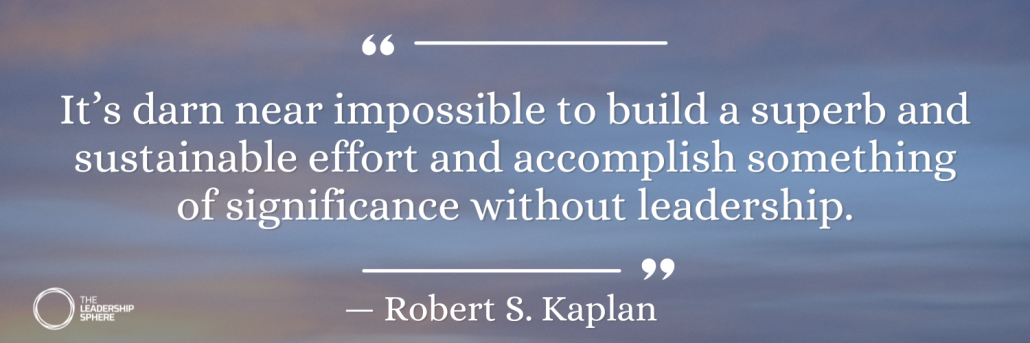
Yet nearly 90% of strategies fail at the execution stage according to Harvard Business School Professor Robert Kaplan’s book, The Balanced Scorecard: Translating Strategy into Action. This most often occurs because the bridge between strategic intent and day-to-day action is missing, misaligned, or underdeveloped.
We look at why the gap between vision and delivery persists and what organisations can do to close it for good. The path forward is more achievable than most leaders realise.
The Leadership Gap: When Brilliant Strategies Fall Short
Picture a beautifully crafted strategy document. One that took months of board-level deliberation, external consultants, and late-night revisions to produce. Now picture it sitting in a shared drive, unread, while teams continue operating exactly as they did before it was written.
This is the leadership gap. And it is far more common than most organisations care to admit.
Strategy execution success depends on leaders who do more than endorse a plan from the top. It requires executives who actively communicate, model, and follow through on strategic priorities consistently, and at every level of the organisation. When that follow-through is absent, even the most ambitious strategy stalls.
The root cause is rarely apathy. More often, it is a lack of clarity about what execution actually looks like in practice. Senior leaders may articulate the destination without providing a roadmap. Middle managers, caught between directives from above and operational demands below, default to the familiar. Frontline employees, with no visible connection between their daily tasks and the organisation’s broader goals, simply get on with their jobs.
The gap widens. The strategy gathers dust.
Connecting Daily Work to Strategic Goals
One of the most powerful things a leader can do is help every employee understand how their work contributes to something larger. This concept (what we at The Leadership Sphere refer to as ‘Lines of Sight’) is central to how to implement strategy execution effectively.
A Line of Sight is exactly what it sounds like: a clear, unobstructed view from an individual’s daily responsibilities all the way to the organisation’s strategic objectives. When employees can draw that line, engagement rises, decision-making improves, and discretionary effort increases.
Creating those lines requires leaders to translate strategy into meaningful, role-specific language. A customer service representative does not need to understand the full mechanics of a market expansion strategy, but they do need to understand how every customer interaction shapes brand reputation, which in turn supports that goal. The translation is the leader’s job.
Here are three practical ways leaders can build clearer Lines of Sight across their organisations:
Cascade objectives with context. Rather than simply distributing goals, leaders should explain the why behind each priority. Context drives commitment.
Connect performance conversations to strategy. Regular one-to-ones and team meetings should explicitly link individual contributions to broader strategic outcomes.
Celebrate strategic wins visibly. When teams hit milestones that advance the strategy, recognise it publicly. It reinforces the connection between action and impact.
In organisations that do this well, employees know the strategy and they feel personally invested in it.
Aligning Leadership Style with Strategic Demands
Here’s a challenge that doesn’t get enough attention: not every leader is naturally wired for execution.
Some leaders are gifted visionaries, brilliant at articulating where the organisation needs to go, inspiring confidence and excitement in those around them. Others are natural operators, skilled at building systems, managing complexity, and driving consistent delivery. Both are essential. But when the wrong leadership style is applied at the wrong stage of a strategy, the results can be frustrating for everyone involved.
This is where leadership assessment and profiling becomes genuinely valuable.
Developing leadership capabilities in this way isn’t about labelling people or limiting potential. It’s about helping leaders understand themselves more clearly, so they can lead more effectively.
When organisations invest in targeted leadership training aligned to their strategic priorities, three things tend to happen:
Leaders become more self-aware. They understand their strengths and blind spots, which makes them better at building complementary teams around them.
Execution capability increases. Leaders are better equipped to translate strategy into action, manage through ambiguity, and sustain momentum when the initial energy of a strategy launch has faded.
The goal, ultimately, is to close the gap between vision and delivery; building a leadership population that can do both.
Transforming Your Leadership Team Into an Execution Engine
Strategy execution success is not a matter of luck, and it is rarely a matter of strategy quality. It is a leadership challenge. One that organisations can meet when they take deliberate, structured action.
The journey begins with honesty: an honest assessment of where the current leadership team stands, what capabilities exist, and where the gaps are. From there, the work of development, alignment, and accountability can begin.
Here is where to start:
Audit your leadership follow-through. Ask where strategies have stalled in the past, and trace the pattern back to leadership behaviour rather than market conditions.
Invest in assessment and profiling tools. Use structured tools to understand the styles and capabilities across your leadership team before the next strategy cycle begins.
Build lines of sight from top to bottom. Ensure that leaders at every level can articulate how their team’s work connects to the organisation’s strategic goals.
Create accountability structures. Strategy execution does not sustain itself. Build in regular checkpoints, visible metrics, and leadership conversations that keep the strategy alive.
A unified leadership team (one that understands its strategy, believes in it, and knows how to bring it to life) is the most powerful competitive advantage any organisation can have. The strategies may differ from one year to the next. The leaders who can execute them are what endure.
The Role of Leadership in Driving Strategy Execution Success
https://theleadershipsphere.com.au/wp-content/uploads/2026/03/2603_001-Article.png10801920Phillip Ralphhttps://theleadershipsphere.com.au/wp-content/uploads/2021/09/TLS_Blue-Grey-Horizontal-300x124-fix.pngPhillip Ralph2026-03-05 08:00:592026-03-06 10:23:10The Role of Leadership in Driving Strategy Execution Success
Are You the Team's Default Mediator? Here's Why That's a ProblemTwo…
https://theleadershipsphere.com.au/wp-content/uploads/2026/08/2608_004-Article-scaled.jpg17092560Phillip Ralphhttps://theleadershipsphere.com.au/wp-content/uploads/2021/09/TLS_Blue-Grey-Horizontal-300x124-fix.pngPhillip Ralph2026-08-27 08:00:182026-08-28 13:38:01Are You the Team’s Default Mediator? Here’s Why That’s a Problem
Psychological Safety and Challenge: Getting the Balance RightEvery…
https://theleadershipsphere.com.au/wp-content/uploads/2026/07/2608_003-Article.png10801920Phillip Ralphhttps://theleadershipsphere.com.au/wp-content/uploads/2021/09/TLS_Blue-Grey-Horizontal-300x124-fix.pngPhillip Ralph2026-08-20 08:00:002026-08-26 12:20:35Psychological Safety and Challenge: Getting the Balance Right
How to Read the Room: Recognising Tension Before It EscalatesConflict…
https://theleadershipsphere.com.au/wp-content/uploads/2026/08/2608_002-Blog.png10801920Phillip Ralphhttps://theleadershipsphere.com.au/wp-content/uploads/2021/09/TLS_Blue-Grey-Horizontal-300x124-fix.pngPhillip Ralph2026-08-11 08:00:572026-08-12 19:48:29How to Read the Room: Recognising Tension Before It Escalates
Are You the Team's Default Mediator? Here's Why That's a ProblemTwo…
https://theleadershipsphere.com.au/wp-content/uploads/2026/08/2608_004-Article-scaled.jpg17092560Phillip Ralphhttps://theleadershipsphere.com.au/wp-content/uploads/2021/09/TLS_Blue-Grey-Horizontal-300x124-fix.pngPhillip Ralph2026-08-27 08:00:182026-08-28 13:38:01Are You the Team’s Default Mediator? Here’s Why That’s a Problem
Psychological Safety and Challenge: Getting the Balance RightEvery…
https://theleadershipsphere.com.au/wp-content/uploads/2026/07/2608_003-Article.png10801920Phillip Ralphhttps://theleadershipsphere.com.au/wp-content/uploads/2021/09/TLS_Blue-Grey-Horizontal-300x124-fix.pngPhillip Ralph2026-08-20 08:00:002026-08-26 12:20:35Psychological Safety and Challenge: Getting the Balance Right
How to Read the Room: Recognising Tension Before It EscalatesConflict…
https://theleadershipsphere.com.au/wp-content/uploads/2026/08/2608_002-Blog.png10801920Phillip Ralphhttps://theleadershipsphere.com.au/wp-content/uploads/2021/09/TLS_Blue-Grey-Horizontal-300x124-fix.pngPhillip Ralph2026-08-11 08:00:572026-08-12 19:48:29How to Read the Room: Recognising Tension Before It Escalates


 https://theleadershipsphere.com.au/wp-content/uploads/2026/07/2608_003-Article.png
1080
1920
Phillip Ralph
https://theleadershipsphere.com.au/wp-content/uploads/2021/09/TLS_Blue-Grey-Horizontal-300x124-fix.png
Phillip Ralph2026-08-20 08:00:002026-08-26 12:20:35Psychological Safety and Challenge: Getting the Balance Right
https://theleadershipsphere.com.au/wp-content/uploads/2026/07/2608_003-Article.png
1080
1920
Phillip Ralph
https://theleadershipsphere.com.au/wp-content/uploads/2021/09/TLS_Blue-Grey-Horizontal-300x124-fix.png
Phillip Ralph2026-08-20 08:00:002026-08-26 12:20:35Psychological Safety and Challenge: Getting the Balance Right