Blog title here

How to Diagnose Team Performance Gaps: People vs. System
How to Diagnose Team Performance Gaps: People vs. SystemTo…


High-pressure situations don’t create problems in teams, they reveal them. When the stakes rise, every unresolved disagreement, every avoided conversation, and every poorly defined decision-making process becomes impossible to ignore. The teams that navigate tension effectively under pressure aren’t just lucky. They’ve done the work before the crisis arrives.
We explore what it means to lead conflict-capable teams, why psychological safety in teams is the foundation for strong performance under stress, and what leaders and executive coaches can do right now to build that capability. If you’re involved in executive leadership training, senior leadership development, or simply trying to strengthen your organisational culture, this is where those investments prove their worth.
Most teams underestimate what unresolved disagreement actually costs them. On the surface, sidestepping a difficult conversation looks like pragmatism. Keeping the peace, staying focused, moving on for example. But what it actually does is drive friction underground, where it compounds quietly until a high-stakes moment forces it into the open.
When leaders consistently avoid difficult conversations, they send an unintended message: that their team members can’t be trusted with tough topics. Over time, this erodes psychological safety in teams. Research by Amy Edmondson at Harvard Business School has consistently shown that psychological safety is one of the strongest predictors of team performance. Without it, people self-censor precisely when honest input matters most.
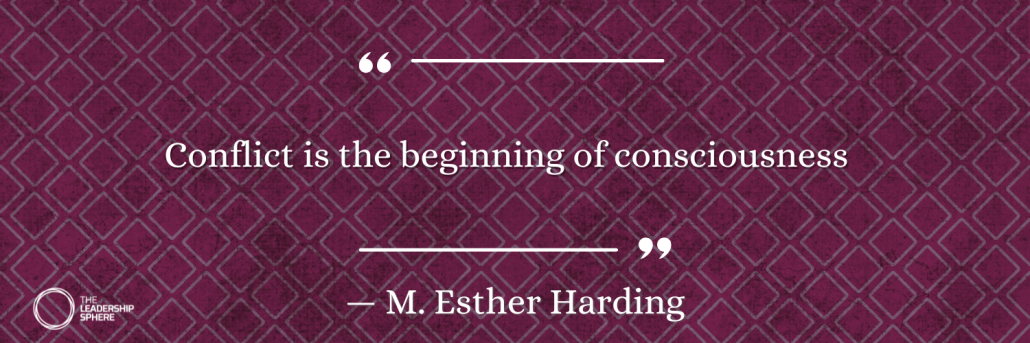
The result is a team that looks cohesive but operates on assumption and avoidance. That’s a fragile foundation for any organisation, and it’s especially dangerous when complexity rises.
Building a conflict-capable culture doesn’t mean encouraging arguments or tolerating dysfunction. It means creating an environment where disagreement is expected, respected, and productive. That distinction matters.
Psychological safety is the foundation. When team members believe their perspective will be heard even when it challenges the dominant view, they engage more honestly, flag risks earlier, and make better collective decisions. Executive leadership training that focuses purely on strategy and execution, without addressing how disagreement is handled, misses a critical capability gap.
Strong organisational culture normalises productive conflict before pressure hits. That means leadership modelling openness to challenge, teams developing shared norms around how debate happens, and the organisation treating disagreement as a sign of engagement rather than a threat to cohesion.
This doesn’t happen automatically. It’s designed through deliberate practices, consistent leadership behaviour, and investment in the right development programs.
Pressure amplifies what already exists in a team. If trust is fragile before a crisis, it fractures under one. If communication norms are unclear, the confusion multiplies when speed is required. This is why preparation matters far more than reaction.
Conflict-capable teams approach high-stakes moments differently. Rather than allowing pressure to suppress debate (which is a common and costly response) they use it as a prompt to sharpen their thinking. They know how to disagree efficiently, reach decisions with confidence, and maintain relationships through the process.
For leaders, this requires a specific set of skills: the ability to facilitate rather than dictate, to hold space for uncertainty without becoming paralysed by it, and to distinguish between productive tension that generates insight and destructive conflict that erodes trust. Senior leaders that build these capabilities give leaders a genuine advantage when complexity rises.
The leaders who handle pressure best aren’t those who avoid conflict. They’re the ones who’ve learned to work through it.
Knowing that conflict capability matters is one thing. Building it requires deliberate practice. Here are the strategies that make the most difference.
Establish decision-making frameworks before crisis hits. When a team is under pressure, debate about how to decide is a luxury they can’t afford. Agreeing in advance who has input, who has authority, and how trade-offs will be weighed, removes a significant source of friction in the moment.
Model vulnerability and curiosity when disagreement surfaces. Leaders set the tone. When a senior leader responds to challenge with genuine curiosity rather than defensiveness, they demonstrate that dissent is not only tolerated but valued. This single behaviour does more for psychological safety in teams than most formal interventions.
Use executive coaching to surface default conflict patterns. Most leaders have habitual responses to tension that they’re not fully aware of; withdrawal, escalation, or over-accommodation. Executive coaching creates the space to examine these patterns, understand their impact, and develop more adaptive responses. This is one of the highest-leverage investments a leader or organisation can make.
Create regular forums for lower-stakes practice. Teams get better at navigating disagreement by doing it repeatedly in environments where the consequences are manageable. Team retrospectives, structured debate on operational decisions, and peer feedback sessions all create opportunities to build the muscle before the pressure is real.
These strategies aren’t complicated, but they require consistency. Organisations that embed them into their senior leadership development programs build teams that are genuinely ready for complexity.
The organisational case for this work is clear. Teams with strong psychological safety outperform their peers in conditions of uncertainty and change because they navigate conflict more effectively. They catch errors earlier, integrate diverse perspectives more fully, and maintain momentum when others stall.
Leading teams through tension also builds loyalty. When people experience a leader who handles pressure with integrity, doesn’t collapse into blame or suppress dissent, and doesn’t sacrifice relationships for short-term compliance, they trust that leader more deeply. That trust becomes a performance asset that compounds over time.
Investment in executive leadership training and executive coaching isn’t a soft spend. It’s a direct investment in the conditions that determine whether a team performs when it matters most.
Tension is not a sign that something has gone wrong. Handled well, it’s one of the most powerful catalysts for better decisions and stronger teams. The leaders who understand this don’t dread pressure because they’ve prepared for it.
Executive leadership training that prioritises psychological safety, conflict capability, and honest communication gives leaders the tools to turn difficult moments into defining ones. A senior leadership development program that goes beyond strategy to address how people actually work through disagreement build organisations that are resilient by design.
The question isn’t whether your team will face high-stakes tension. It will. The question is whether you’ve built the culture and capability to meet it well.
If this post has raised questions about your own team’s conflict capability, or about how executive coaching might support your development as a leader, that’s a conversation worth having.

 https://theleadershipsphere.com.au/wp-content/uploads/2026/10/2610_004-Blog.png
1080
1920
Phillip Ralph
https://theleadershipsphere.com.au/wp-content/uploads/2021/09/TLS_Blue-Grey-Horizontal-300x124-fix.png
Phillip Ralph2026-10-20 08:00:202026-10-21 17:26:29Why Strategy Fails at the Execution Stage
https://theleadershipsphere.com.au/wp-content/uploads/2026/10/2610_004-Blog.png
1080
1920
Phillip Ralph
https://theleadershipsphere.com.au/wp-content/uploads/2021/09/TLS_Blue-Grey-Horizontal-300x124-fix.png
Phillip Ralph2026-10-20 08:00:202026-10-21 17:26:29Why Strategy Fails at the Execution Stage https://theleadershipsphere.com.au/wp-content/uploads/2026/10/2610_003-Article-scaled.jpg
1707
2560
Phillip Ralph
https://theleadershipsphere.com.au/wp-content/uploads/2021/09/TLS_Blue-Grey-Horizontal-300x124-fix.png
Phillip Ralph2026-10-15 08:00:512026-10-16 09:49:25Transforming Leadership Challenges into Opportunities
https://theleadershipsphere.com.au/wp-content/uploads/2026/10/2610_003-Article-scaled.jpg
1707
2560
Phillip Ralph
https://theleadershipsphere.com.au/wp-content/uploads/2021/09/TLS_Blue-Grey-Horizontal-300x124-fix.png
Phillip Ralph2026-10-15 08:00:512026-10-16 09:49:25Transforming Leadership Challenges into Opportunities https://theleadershipsphere.com.au/wp-content/uploads/2021/09/TLS_Blue-Grey-Horizontal-300x124-fix.png
0
0
Phillip Ralph
https://theleadershipsphere.com.au/wp-content/uploads/2021/09/TLS_Blue-Grey-Horizontal-300x124-fix.png
Phillip Ralph2026-10-13 08:00:092026-10-14 15:03:56How to Diagnose Team Performance Gaps: People vs. System
https://theleadershipsphere.com.au/wp-content/uploads/2026/10/2610_002-Article-scaled.jpg
1707
2560
Phillip Ralph
https://theleadershipsphere.com.au/wp-content/uploads/2021/09/TLS_Blue-Grey-Horizontal-300x124-fix.png
Phillip Ralph2026-10-08 08:00:002026-10-15 11:35:51Why Capable Teams Still Depend on Their Leaders
https://theleadershipsphere.com.au/wp-content/uploads/2026/10/2610_004-Blog.png
1080
1920
Phillip Ralph
https://theleadershipsphere.com.au/wp-content/uploads/2021/09/TLS_Blue-Grey-Horizontal-300x124-fix.png
Phillip Ralph2026-10-20 08:00:202026-10-21 17:26:29Why Strategy Fails at the Execution Stage
https://theleadershipsphere.com.au/wp-content/uploads/2026/10/2610_003-Article-scaled.jpg
1707
2560
Phillip Ralph
https://theleadershipsphere.com.au/wp-content/uploads/2021/09/TLS_Blue-Grey-Horizontal-300x124-fix.png
Phillip Ralph2026-10-15 08:00:512026-10-16 09:49:25Transforming Leadership Challenges into Opportunities
https://theleadershipsphere.com.au/wp-content/uploads/2021/09/TLS_Blue-Grey-Horizontal-300x124-fix.png
0
0
Phillip Ralph
https://theleadershipsphere.com.au/wp-content/uploads/2021/09/TLS_Blue-Grey-Horizontal-300x124-fix.png
Phillip Ralph2026-10-13 08:00:092026-10-14 15:03:56How to Diagnose Team Performance Gaps: People vs. System
https://theleadershipsphere.com.au/wp-content/uploads/2026/10/2610_002-Article-scaled.jpg
1707
2560
Phillip Ralph
https://theleadershipsphere.com.au/wp-content/uploads/2021/09/TLS_Blue-Grey-Horizontal-300x124-fix.png
Phillip Ralph2026-10-08 08:00:002026-10-15 11:35:51Why Capable Teams Still Depend on Their Leaders
https://theleadershipsphere.com.au/wp-content/uploads/2021/09/TLS_Blue-Grey-Horizontal-300x124-fix.png
0
0
Phillip Ralph
https://theleadershipsphere.com.au/wp-content/uploads/2021/09/TLS_Blue-Grey-Horizontal-300x124-fix.png
Phillip Ralph2026-10-13 08:00:092026-10-14 15:03:56How to Diagnose Team Performance Gaps: People vs. System
https://theleadershipsphere.com.au/wp-content/uploads/2026/10/2610_002-Article-scaled.jpg
1707
2560
Phillip Ralph
https://theleadershipsphere.com.au/wp-content/uploads/2021/09/TLS_Blue-Grey-Horizontal-300x124-fix.png
Phillip Ralph2026-10-08 08:00:002026-10-15 11:35:51Why Capable Teams Still Depend on Their Leaders
https://theleadershipsphere.com.au/wp-content/uploads/2026/10/2610_004-Blog.png
1080
1920
Phillip Ralph
https://theleadershipsphere.com.au/wp-content/uploads/2021/09/TLS_Blue-Grey-Horizontal-300x124-fix.png
Phillip Ralph2026-10-20 08:00:202026-10-21 17:26:29Why Strategy Fails at the Execution Stage
https://theleadershipsphere.com.au/wp-content/uploads/2026/10/2610_003-Article-scaled.jpg
1707
2560
Phillip Ralph
https://theleadershipsphere.com.au/wp-content/uploads/2021/09/TLS_Blue-Grey-Horizontal-300x124-fix.png
Phillip Ralph2026-10-15 08:00:512026-10-16 09:49:25Transforming Leadership Challenges into Opportunities
https://theleadershipsphere.com.au/wp-content/uploads/2021/09/TLS_Blue-Grey-Horizontal-300x124-fix.png
0
0
Phillip Ralph
https://theleadershipsphere.com.au/wp-content/uploads/2021/09/TLS_Blue-Grey-Horizontal-300x124-fix.png
Phillip Ralph2026-10-13 08:00:092026-10-14 15:03:56How to Diagnose Team Performance Gaps: People vs. System
https://theleadershipsphere.com.au/wp-content/uploads/2026/10/2610_002-Article-scaled.jpg
1707
2560
Phillip Ralph
https://theleadershipsphere.com.au/wp-content/uploads/2021/09/TLS_Blue-Grey-Horizontal-300x124-fix.png
Phillip Ralph2026-10-08 08:00:002026-10-15 11:35:51Why Capable Teams Still Depend on Their Leaders