How to Read the Room: Recognising Tension Before It EscalatesConflict…
https://theleadershipsphere.com.au/wp-content/uploads/2026/08/2608_002-Blog.png10801920Phillip Ralphhttps://theleadershipsphere.com.au/wp-content/uploads/2021/09/TLS_Blue-Grey-Horizontal-300x124-fix.pngPhillip Ralph2026-08-11 08:00:572026-08-12 19:48:29How to Read the Room: Recognising Tension Before It Escalates
Are You the Team’s Default Mediator? Here’s Why That’s a Problem
Are You the Team’s Default Mediator? Here’s Why That’s a Problem
Two capable people on your team are at odds. The tension is starting to affect everyone around them. And without quite deciding to, you step in. You hear both sides, smooth things over and broker a way forward.
It feels like the responsible thing to do. Often, it is. But when stepping in becomes your default, something quietly shifts. Your team stops resolving tension itself and starts bringing every disagreement to you.
In this post, I want to show you the hidden cost of being the team’s default mediator and how to shift that responsibility back where it belongs. You’ll learn why capable leaders fall into the mediator trap, how it quietly caps your team’s performance, and a practical way to build the capability for people to work through tension themselves. This is one of the most important shifts in executive leadership development, and it’s more learnable than most leaders expect.
Why Leaders Become the Default Mediator
The leaders I coach rarely set out to mediate everything. They drift into it, one reasonable decision at a time.
When a disagreement flares up, resolving it yourself feels faster than watching two people struggle through it. You have the seniority, the relationships, and the perspective to see a path forward. So you take it and the issue gets settled.
The trouble is that what works once becomes a pattern. Each time you resolve tension on the team’s behalf, you teach people that escalation is the route to resolution. They learn to bring problems to you rather than work them out between themselves.
There’s also a quieter driver. Watching your team sit in unresolved tension is uncomfortable. Stepping in relieves that discomfort quickly, for you and for them. But short-term relief and long-term capability rarely point in the same direction.
Takeaway: Over-mediating isn’t a character flaw. It’s a well-intentioned habit that forms one reasonable decision at a time.
The Hidden Cost of Over-Mediating
The damage of constant mediation doesn’t show up on any dashboard. It shows up in how your team functions, or fails to.
Your team becomes dependent on you
When you resolve every conflict, people stop developing the skill to resolve their own. Disagreements that two colleagues could work through directly get parked until you’re available. You become the bottleneck for a team that should be able to move without you.
Consider a senior leader whose two direct reports clash over priorities every planning cycle. If the leader steps in each time, the pattern never changes. Three years on, the same two people still can’t have a straight conversation without a referee in the room.
Issues get escalated instead of resolved
A team that relies on a mediator learns to escalate. Rather than raising a concern with the person who can actually address it, people route it upward and wait. Small frictions that should be settled in a corridor become items on your agenda instead.
You carry conversations that aren’t yours to carry
Every mediated dispute is a conversation someone else should be having. You end up holding emotional and relational weight on behalf of people who are perfectly capable of holding it themselves. Over time, that accumulates into a genuine leadership burden.
Takeaway: Constant mediation feels helpful, but it slowly caps what your team can achieve while keeping you doing work that isn’t yours.
Mediator or Capability Builder? Knowing the Difference
Stepping back doesn’t mean stepping away. It means changing how you engage when tension surfaces.
A mediator absorbs the conflict. A capability builder helps the team develop the skill to handle it. The distinction matters, because it’s the difference between solving today’s problem and preventing the next ten.
When to step in
There are moments that genuinely call for your involvement. A conflict involving conduct, safety or serious performance concerns needs a leader, not a coaching conversation. So does a dispute where the power imbalance is too great for the parties to resolve fairly on their own.
When to step back
Most day-to-day tension is different. Competing priorities, differing standards, personality friction, and disagreements over approach are exactly the conversations your team should learn to navigate directly. Stepping back here isn’t neglect. It’s an investment.
Pro tip: Before you intervene, ask yourself one question: “Is this a conflict only I can resolve, or one the team should learn to resolve itself?” That single pause redirects most unnecessary mediation.
Takeaway: Your job isn’t to substitute for your team’s conflict capability. It’s to build it.
5 Ways to Shift Responsibility Back to the Team
Moving from mediator to capability builder is a deliberate shift. Doing so effectively shouldn’t be a sudden withdrawal. Here’s where to start.
1. Name the pattern openly
Begin by making the shift explicit. Tell your team you’ve noticed that disagreements tend to route through you, and that you want to change it. Demonstrate your concern by trusting them to handle it more directly. Naming the pattern gives everyone permission to do things differently.
2. Build psychological safety in teams
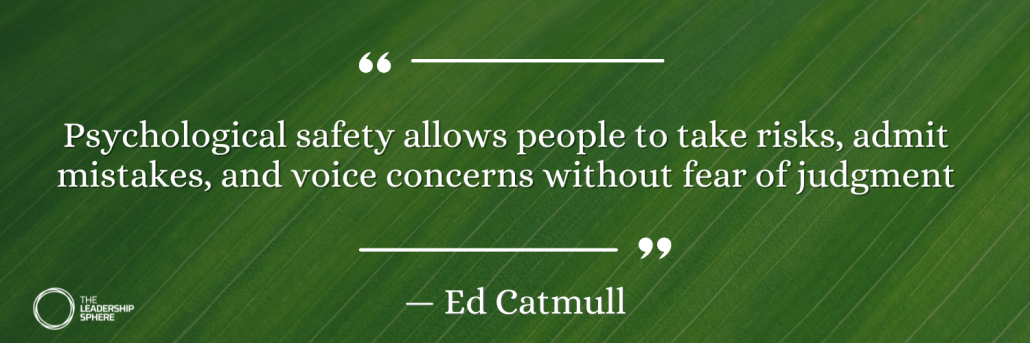
People only raise issues directly when it feels safe to do so. Psychological safety in teams is the shared belief that speaking up, disagreeing or admitting a mistake won’t be met with punishment or ridicule. Your response when someone challenges you or gets something wrong, sets that standard for everyone. Model the openness you want to see, and safety grows.
3. Set the expectation of direct conversation
Make it a stated team norm that concerns go first to the person involved, not upward to you. When people know direct conversation is the default expectation, escalation stops being the easy option. This is one of the simplest habits to establish and one of the most powerful.
4. Coach instead of solving
The next time someone brings you a conflict with a colleague, resist the urge to fix it. Ask questions instead: “What have you said to them directly? What outcome are you after? What’s stopping you from raising it?” You’re handing the problem back with support rather than abandonment.
5. Debrief conflict as a team
When your team handles a disagreement well, name it. When it goes poorly, discuss what could be done differently next time. Treating conflict as a shared skill to develop rather than an event to survive, turns everyday tension into collective learning. Structured leadership training programs for conflict resolution skills can accelerate this, but the everyday debrief is where the habit takes hold.
Takeaway: Shifting responsibility is a series of small, deliberate moves; coach, expect direct conversation, build safety, and debrief openly.
Making the Shift Stick
Old habits reassert themselves under pressure. When deadlines compress and tempers fray, the pull to jump in and mediate grows strongest; precisely when you most need your team to handle tension itself.
Consistency is what makes the new pattern hold. Every time you coach instead of solve, you reinforce that your team is capable. Every time you resist the easy intervention, you widen their capacity to work through disagreement without you.
This is why the shift rarely happens through good intentions alone. It’s a genuine capability, and like any capability it’s built through structured leadership development training and deliberate practice. A well-designed leadership training program gives senior leaders both the framework and the confidence to change the pattern for good.
Takeaway: The shift holds when you stay consistent under pressure and treat it as a skill to build, not a switch to flip.
Bringing It Together
Being the team’s default mediator feels like strong, supportive leadership. In reality, it quietly keeps your team dependent, encourages escalation over resolution, and loads you with conversations that were never yours to carry.
The alternative isn’t to disappear. It’s to change how you show up. Coaching rather than solving, setting clear expectations for direct conversation, and building the psychological safety that lets people raise issues themselves.
Start with three moves this week:
Notice one conflict you’d normally step into and coach instead of solve.
Set the expectation that concerns go first to the person involved.
Model openness the next time someone challenges you.
If you’re ready to build this capability for yourself and your team, we’d love to hear from you. Get in touch and let’s talk about how we can support your senior leadership development to make it happen.
Are You the Team’s Default Mediator? Here’s Why That’s a Problem
https://theleadershipsphere.com.au/wp-content/uploads/2026/08/2608_004-Article-scaled.jpg17092560Phillip Ralphhttps://theleadershipsphere.com.au/wp-content/uploads/2021/09/TLS_Blue-Grey-Horizontal-300x124-fix.pngPhillip Ralph2026-08-27 08:00:182026-08-28 13:38:01Are You the Team’s Default Mediator? Here’s Why That’s a Problem
Are You the Team's Default Mediator? Here's Why That's a ProblemTwo…
https://theleadershipsphere.com.au/wp-content/uploads/2026/08/2608_004-Article-scaled.jpg17092560Phillip Ralphhttps://theleadershipsphere.com.au/wp-content/uploads/2021/09/TLS_Blue-Grey-Horizontal-300x124-fix.pngPhillip Ralph2026-08-27 08:00:182026-08-28 13:38:01Are You the Team’s Default Mediator? Here’s Why That’s a Problem
Psychological Safety and Challenge: Getting the Balance RightEvery…
https://theleadershipsphere.com.au/wp-content/uploads/2026/07/2608_003-Article.png10801920Phillip Ralphhttps://theleadershipsphere.com.au/wp-content/uploads/2021/09/TLS_Blue-Grey-Horizontal-300x124-fix.pngPhillip Ralph2026-08-20 08:00:002026-08-26 12:20:35Psychological Safety and Challenge: Getting the Balance Right
How to Read the Room: Recognising Tension Before It EscalatesConflict…
https://theleadershipsphere.com.au/wp-content/uploads/2026/08/2608_002-Blog.png10801920Phillip Ralphhttps://theleadershipsphere.com.au/wp-content/uploads/2021/09/TLS_Blue-Grey-Horizontal-300x124-fix.pngPhillip Ralph2026-08-11 08:00:572026-08-12 19:48:29How to Read the Room: Recognising Tension Before It Escalates
When Your Team Goes Quiet: The Warning Signs Leaders Often…
https://theleadershipsphere.com.au/wp-content/uploads/2026/08/2608_001-Blog.png10801920Phillip Ralphhttps://theleadershipsphere.com.au/wp-content/uploads/2021/09/TLS_Blue-Grey-Horizontal-300x124-fix.pngPhillip Ralph2026-08-04 08:00:282026-08-04 20:55:37When Your Team Goes Quiet: The Warning Signs Leaders Often Miss
Are You the Team's Default Mediator? Here's Why That's a ProblemTwo…
https://theleadershipsphere.com.au/wp-content/uploads/2026/08/2608_004-Article-scaled.jpg17092560Phillip Ralphhttps://theleadershipsphere.com.au/wp-content/uploads/2021/09/TLS_Blue-Grey-Horizontal-300x124-fix.pngPhillip Ralph2026-08-27 08:00:182026-08-28 13:38:01Are You the Team’s Default Mediator? Here’s Why That’s a Problem
Psychological Safety and Challenge: Getting the Balance RightEvery…
https://theleadershipsphere.com.au/wp-content/uploads/2026/07/2608_003-Article.png10801920Phillip Ralphhttps://theleadershipsphere.com.au/wp-content/uploads/2021/09/TLS_Blue-Grey-Horizontal-300x124-fix.pngPhillip Ralph2026-08-20 08:00:002026-08-26 12:20:35Psychological Safety and Challenge: Getting the Balance Right
How to Read the Room: Recognising Tension Before It EscalatesConflict…
https://theleadershipsphere.com.au/wp-content/uploads/2026/08/2608_002-Blog.png10801920Phillip Ralphhttps://theleadershipsphere.com.au/wp-content/uploads/2021/09/TLS_Blue-Grey-Horizontal-300x124-fix.pngPhillip Ralph2026-08-11 08:00:572026-08-12 19:48:29How to Read the Room: Recognising Tension Before It Escalates
When Your Team Goes Quiet: The Warning Signs Leaders Often…
https://theleadershipsphere.com.au/wp-content/uploads/2026/08/2608_001-Blog.png10801920Phillip Ralphhttps://theleadershipsphere.com.au/wp-content/uploads/2021/09/TLS_Blue-Grey-Horizontal-300x124-fix.pngPhillip Ralph2026-08-04 08:00:282026-08-04 20:55:37When Your Team Goes Quiet: The Warning Signs Leaders Often Miss


 https://theleadershipsphere.com.au/wp-content/uploads/2026/08/2608_002-Blog.png
1080
1920
Phillip Ralph
https://theleadershipsphere.com.au/wp-content/uploads/2021/09/TLS_Blue-Grey-Horizontal-300x124-fix.png
Phillip Ralph2026-08-11 08:00:572026-08-12 19:48:29How to Read the Room: Recognising Tension Before It Escalates
https://theleadershipsphere.com.au/wp-content/uploads/2026/08/2608_002-Blog.png
1080
1920
Phillip Ralph
https://theleadershipsphere.com.au/wp-content/uploads/2021/09/TLS_Blue-Grey-Horizontal-300x124-fix.png
Phillip Ralph2026-08-11 08:00:572026-08-12 19:48:29How to Read the Room: Recognising Tension Before It Escalates