Posts

working at a desk with laptop and notebook

Making The Move To Online Learning For Leadership Development

Making The Move To Online Learning For Leadership Development

The way we connect, learn, and work has undergone a significant overhaul since the Coronavirus pandemic reached a global scale at the beginning of the year. As we approach the final weeks of 2020, let us reflect on the impact that this shift in operations has had and what lasting effects we may take into 2021 and beyond. Online learning has been one of the most discussed and debated issues to arise in the wake of this continual change. Though the focus has largely been on schools, it is worth investigating how we might approach the topic as it relates to online leadership development. Incorporating virtual leadership programs into your learning and development benefits not just the participants, but the whole organisation. Delivering this kind of training online, participants can take ownership of their own learning. Interesting though is the varied perceptions of what online learning is, and we should note that online learning may be self paced online learning, or a virtual classroom (which is an adapted version of face to face, for learning and development activities such as leadership development, which has best impact when delivered by an expert facilitator, live).

Advantages of Online Learning


Flexibility

Often, face-to-face training programs are run over the course of one or two days thus limiting the amount of time participants and facilitators must dig deeply into the material. When participants are given control over how and when they interact with their program means that they can take the time they need to truly immerse themselves in the learning. It also allows for the learning to take place around a potentially busy schedule rather than interrupting several days work on other commitments. This kind of self paced leadership training makes it possible to revisit topics of interest or misunderstanding as much as is needed. 

Saves on Resources

Just as online leadership programs provide a flexible option for participants, they are also a flexible option for organisations. This is because online training can be delivered at a fraction of the strain on resources as classroom style programs. Several of the costs associated with face-to-face programs can be eliminated – space, time, and distance often being the biggest obstacles. The greatest benefit of this approach is that it may allow for more people to be offered the opportunity to participate as these added restrictions are no longer a factor. As a result, team members would not have to miss out on reaching their highest potential as leaders or developing vital skills.

Progressive Learning

Though virtual programs were popular prior to the outbreak of Coronavirus, the pandemic forced many who weren’t already using the available technology to adapt quite quickly or risk falling far behind. The globalisation of most industries means that in order to be forerunners in the field, you must be embracing of innovation. The switch to remote learning and operations is something that has been occurring more and more over the last decade, even for areas beyond compliance, such as leadership development programs, development of high performance teams, executive coaching and other leadership initiatives. What might have taken another few years to become ‘the norm’ happened rapidly over a few short months. By adopting the use of new technologies as early as possible, the more prepared your leaders (and organisation) can be for the future of learning and development.

Improved Virtual Communication & Collaboration

In addition to gaining the technical skills to keep up with new learning tools as they are developed, participants of online training programs also gain the advantage of discovering how to work with others in a virtual environment. This is an unquestionable advantage in the face of globalising industries. The far reaching access to online training allows participants to take part from anywhere in the world. This provides the opportunity to discuss ideas and network with people with a broader range of past experiences and perspectives, expanding your own cross-cultural understanding. Leaders have adjusted the way they manage teams because of remote settings, and how we coach and mentor in new ways that make staff feel that they are supported, albeit from a different physical location.

It was for these reasons above that The Leadership Sphere made the decision to move the extremely successful Dare to Lead Program from being an in person workshop to an online facilitator-led course. In doing this, we have been able to continue to provide this service in a way that allows leaders in different states and  even countries to come together to share in their learning. In a global environment that is constantly shifting and evolving in new ways, we must prepare ourselves with the skills needed to evolve with it. By making the move to online learning for leadership development we can remove some of the obstacles that may hold us back and instead, allow ourselves the advantage of learning from those with whom we may not have otherwise had the opportunity. 

For more information about The Leadership Sphere and how we can support your leaders with leadership development, executive coaching and high performance team programs please visit our website or call us on 1300 100 857.

Making The Move To Online Learning For Leadership Development

team meeting online using Zoom

Do You Have The Right Leadership In Place to Survive Coronavirus?

Do You Have The Right Leadership In Place to Survive Coronavirus?

As COVID-19 continues to disrupt the daily workings of all businesses, directly and indirectly, depending on the type of business you are in, we must stop to consider all of the ways in which it has forced us to become innovators. Without the convenience of having our co-workers and clients nearby we’ve become even more reliant on email, phone calls and web conferencing to stay in touch with each other and conduct networking and maintain personal and professional relationships. With many of us working from home rather than in the office, it is more important than ever before that our leaders are well equipped to propel us forward in times of sustained uncertainty. Corporate leadership programs offer businesses the opportunity to provide their leaders with fundamental skills that will allow them to not only survive turbulent times (not only during this pandemic), but to thrive.

Here are three key leadership skills to getting through times of uncertainty:

Accountability

It can be difficult to remain self-motivated when you’re constantly surrounded by distractions and aren’t confined to a formal office environment. Even if you’re an incredibly dedicated person, everyone has their limits. This is where it becomes important for leaders to provide their teams with a level of accountability beyond a mere deadline. Deadlines might ensure that the work gets done, but accountability serves as a greater motivator to produce excellence. Through regular check-ins with teams and individuals, employees are encouraged to assess their own progress and ability to deliver.

Clear Expectations

While we might have resolved the issue of how we communicate with our teams by incorporating a greater use of technology in our work lives, what and when we are communicating can at times be infrequent. Strong communication goes far beyond setting a list of tasks for employees to complete and leaving them to it. Providing clear expectations and understanding of individual tasks, as well as team and company goals, is vital to ensuring those expectations are met.

Resilience

Resilience is a vital skill (yes….. it is a skill!) that leaders and organisations have always had to have but now it has become critical because operating under unpredictable circumstances has now become business as usual. Since the coronavirus pandemic reached its peak in March 2020, the resilience of our leaders has been tested in unprecedented ways. Even great teams will face difficulties at some point. It is how we deal with these difficulties that determine whether we succumb to the pressure or bounce-back stronger. Targeted leadership capability development should include a focus on resilience and creative problem solving.


Knowing what the right leadership capability skills you need can be a confusing proposition, as there are many and varied opinions on what is the right investment. Interestingly, there has been a direct correlation between those organisations that are continuing to invest in leadership development and those who are finding new ways to thrive during these uncertain times. The Leadership Sphere tailors targeted programs to the needs of individual businesses as there can be no one size fits all approach when it comes to executive leadership development. Though there are several skills that prove to be integral to high performance leadership time and again. Without considering the benefits of creating accountability and setting clear expectations, during normal times and in the middle of a pandemic, we can not hope to build resilient leaders.

For more information about The Leadership Sphere and how we can support your leaders with leadership development, executive coaching and high performance team programs please visit our website or call us on 1300 100 857.

Do You Have The Right Leadership In Place to Survive Coronavirus?

innovation management chnage management

Design Thinking – Trick or Treat?

Design Thinking – Trick or Treat?

What is it?

According to Tim Brown, president and CEO of IDEO:

“Design thinking is a human-centered approach to innovation that draws from the designer’s toolkit to integrate the needs of people, the possibilities of technology, and the requirements for business success.”

Lets Take a Step Back First…

Design as a “way of thinking” in the sciences can be traced to Herbert A. Simon’s 1969 book The Sciences of the Artificial, and in design engineering to Robert McKim’s 1973 book Experiences in Visual Thinking. Peter Rowe’s 1987 book Design Thinking, which described methods and approaches used by architects and urban planners, was a significant early usage of the term in the design research literature.

Rolf Faste expanded on McKim’s work at Stanford University in the 1980s and 1990s, teaching “design thinking as a method of creative action.” Design thinking was adapted for business purposes by Faste’s Stanford colleague David M. Kelley, who founded IDEO in 1991. Over the past 25 years, this practice has become most closely associated with the Hasso Plattner Institute of Design at Stanford University (commonly known as the ‘d.school’).

A Deeper Examination

According to Brown (HBR, 2008), traditionally designers were asked to make an already developed idea more attractive to consumers, however now companies are asking them to create ideas that better meet consumers’ needs and desires. The former role is tactical, and results in limited value creation; the latter is strategic, and leads to dramatic new forms of value.

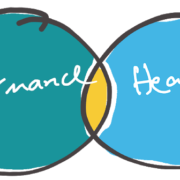
Intersection

The approach brings together what is desirable from a human point of view with what is technologically feasible and economically viable (see figure below).

But I’m Not Creative!

Design thinking is a deeply human process that taps into abilities we all have but get overlooked by more conventional problem-solving practices. Design thinking relies on our ability to be intuitive, to recognize patterns, to construct ideas that are emotionally meaningful as well as functional, and to express ourselves through means beyond words or symbols. Nobody wants to run an organization on feeling, intuition, and inspiration, but an over-reliance on the rational and the analytical can be just as risky. Design thinking provides an integrated third way. It also allows people who aren’t trained as designers to use creative tools to address a vast range of challenges.

“Thinking like a designer can transform the way organisations develop products, services, processes, and strategy.” – IDEO

Bringing Together the three ‘I’s’

Design thinking consists of three overlapping spaces: inspirationideation, and implementation. Inspiration is the problem or opportunity that motivates the search for solutions. Ideation is the process of generating, developing, and testing ideas. Implementation is the path that leads from the project stage into people’s lives.

What About Results?

In assessing design thinking, it is clear that it is in fact a proven and repeatable problem solving protocol that any business or profession can employ to achieve big results. By using both analytical tools and generative techniques, organisations can see how their new or existing operations could look in the future — and build road maps for getting there.

There are many examples of big companies that use design thinking in their day-to-day operations, like Apple and Google. However design thinking can and does work for all types of organizations, big and small. The result can be new,  innovative avenues for growth that are grounded in business viability and market desirability.

Where is it Today?

In the September 2015 edition of the Harvard Business Review (Design Thinking Comes of Age), design thinking was described as a set of principles – empathy with users, a discipline of prototyping, and tolerance for failure chief among them. The article went on to say:

“…is the best tool we have for creating those kinds of interactions and developing a responsive, flexible organizational culture.” – HBR, Sept. 2015

The ‘Idea in Brief’ described in the same edition of HBR (below) highlights the critical role design thinking is now playing in many organisations.

change-management

So…Trick or Treat?

So based on my research, which included desk research (reading everything I could on the subject) and talking with many people in many industries, I formed the view (in my humble opinion) that design thinking is indeed a treat. It has proven itself to more than just a tool or even a process, but rather a way to manage and lead organisations.

Further Posts

I’ll be writing a series of posts centred around how design thinking can help organisations become more innovative, change ready, and agile.

Simulations

Based on my conversations and research, I discovered a firm called ExperiencePoint – who in partnership with IDEO – offer innovative, challenging and fun workshops that teach design thinking in a very applied way by way of computer-based simulations that pack several months of ‘running a project or initiative’ in to a day.

The Leadership Sphere is now accredited to conduct these programs – ExperienceChange and ExperienceInnovation – with teams, managers or anyone interested in creating a high performing organisation through innovation, change and growth.

If would like to learn more about:

Work With Us

If you’re interested in learning more about these programs and how we may be able to work with you to achieve outstanding results, then you can call us on 1300 100 857 or email: support@theleadershipsphere.com.au.

Design Thinking – Trick or Treat?

Change Management Needs Change

Change Management Needs Change

Change Management Needs Change

Ron Ashkenas (Schaffer Consulting) recently blogged on HBR about the state of change management as a discipline, saying that while change management has been in existence for over half a century and despite the huge investment that companies have made in tools, training, and thousands of books (over 83,000 on Amazon), most studies still show a 60-70% failure rate for organizational change projects – a statistic that has stayed constant from the 1970’s to the present.

Is ‘Change Management’ Really the Problem?

He goes on to say that given this evidence, is it possible that everything we know about change management is wrong and that we need to go back to the drawing board? Should we abandon Kotter’s eight success factors, Blanchard’s moving cheese, and everything else we know about engagement, communication, small wins, building the business case, and all of the other elements of the change management framework?

His alternative hypothesis and one we agree with is that the content of change management is reasonably correct, but the managerial capacity to implement it has been woefully underdeveloped. In fact, instead of strengthening managers’ ability to manage change, we’ve instead allowed managers to outsource change management to HR specialists and consultants instead of taking accountability themselves – an approach that often doesn’t work.

Ask Yourselves These Questions…

Ashkenas then asks the following questions for consideration if your organisation (or your piece of it) struggles with effectively implementing change:

1. Do you have a common framework, language, and set of tools for managing significant change? There are plenty to choose from, and many of them have the same set of ingredients, just explained and parsed differently. The key is to have a common set of definitions, approaches, and simple checklists that everyone is familiar with.

2. To what extent are your plans for change integrated into your overall project plans, and not put together separately or in parallel? The challenge is to make change management part and parcel of the business plan, and not an add-on that is managed independently.

3. Finally, who is accountable for effective change management in your organization: Managers or “experts” (whether from staff groups or outside the company)? Unless your managers are accountable for making sure that change happens systematically and rigorously – and certain behaviours are rewarded or punished accordingly – they won’t develop their skills.

Going Deeper.

To build on these points, I would like to offer our view at TLS:

1. Technical Lens: Change often fails because we view it through an overly technical lens, failing to appreciate the people side such as considering what changes we are really asking people to make, not just redrawing lines on an organisational chart? If you’ve ever moved a team member from one desk to another and wondered why it was so hard, you’ll know that there is always a non-technical component to every change! Maybe you’re moving them away from the pathway to the kitchen and therefore their vehicle for social connection for example?

2. 100-year Old Management Approach: Most organisations are still stuck in the last century or perhaps even the century before that! Until we equip managers with the right resources, tools and skills to approach change in a much more thoughtful way, we will continue to wonder why ‘change management’ doesn’t work.

3. Give the Work to the Rightful Owners: In our desire (and fears) to try to meet the expectations of a antiquated management approach, we assume those in authority have to also have the answers and then direct the foot soldiers to go away and do the work – and then we wonder why people don’t feel engaged, excited and accountable. We need to practice letting go of control and position the work with the right people.

One of our approaches for example, called TakeON!, gives the work of developing managers and coming up with real solutions to real problems back to the business. Leader-led conversations generate ownership, accountability and skill development in a real-world setting. Consultants are in the background supporting the process, but it’s being led in a sustainable way by people in the business. It may be useful to examine your own organisation to see where those in authority are playing that card too much and paying the price of actually managing ‘non-change’.

Change Management Needs Change