Blog title here
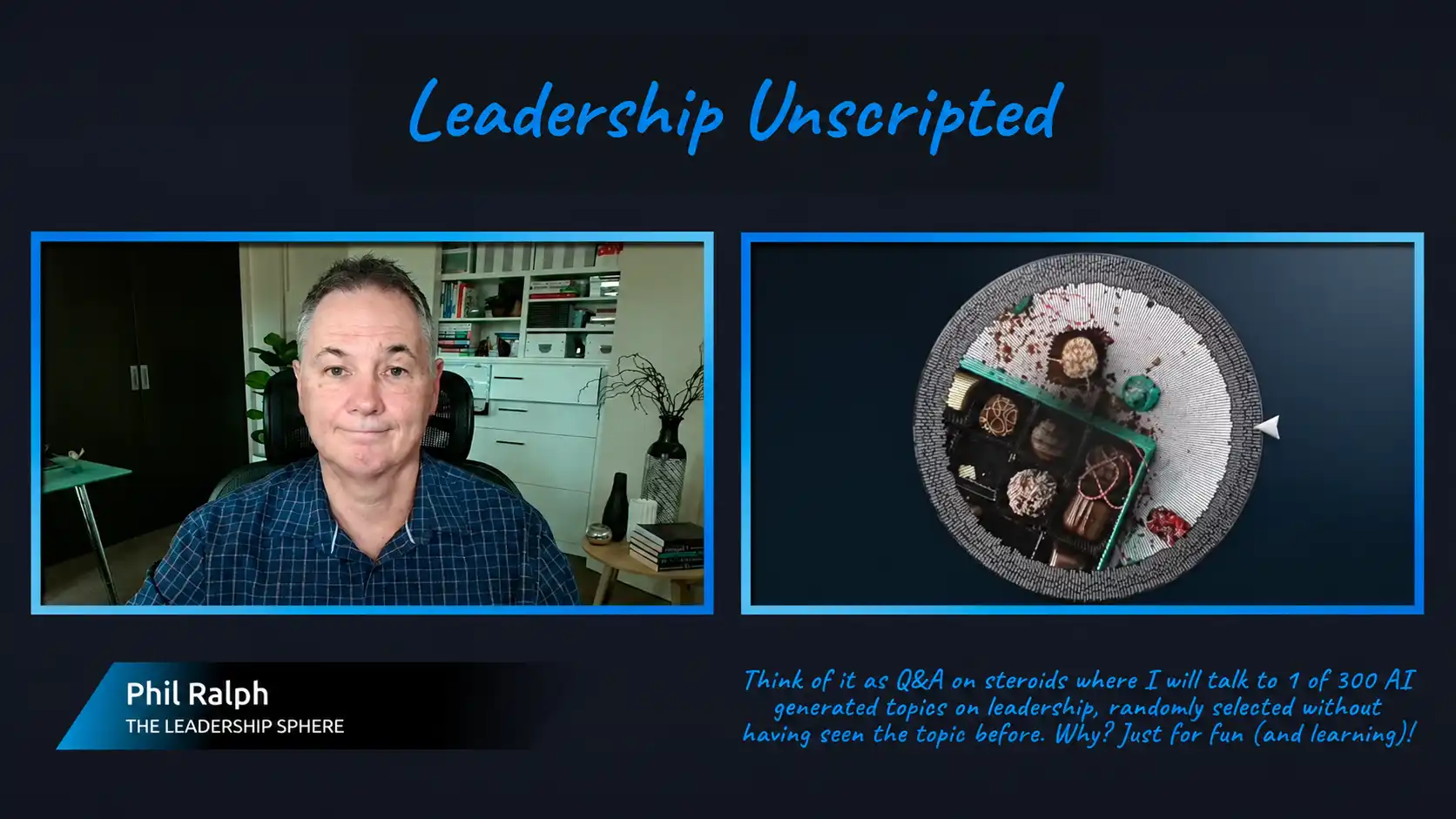

I just kicked off a new video series called Leadership Unscripted. A wheel with 300 leadership topics, I spin it, and whatever lands is what I talk about for the next three minutes. I haven’t seen the topics before I spin.
Episode one landed on shaping identity through actions. I talk about how a leader’s daily actions shape the way people see themselves, the difference between strengths-based and industrial-age leadership, and why your leadership shadow matters more than your job title.
The wheel landed on “shaping identity through actions”. Here’s what I unpacked in the three minutes that followed.
Leadership shapes two identities at once: yours, and the identity of the people you lead.
It sits at the heart of what leadership actually is. The goal should be people-first cultures where someone’s identity is meaningfully connected to the work they do.
Two leadership approaches sit on opposite ends of the spectrum.
A strengths-based, human-centred approach builds people up. The older industrial-age paradigm treats people as numbers and manages them without humanity. One lets people thrive. The other wears them down.
Every single action a leader takes shapes more than culture and climate.
It shapes how people think about themselves. The question worth sitting with: do your people see themselves as positive, stretched, challenged, and trusted to do their best work? Or do they see themselves as a number, put to task and asked to deliver without any real humanity in the way they’re led?
Human-centred leadership starts with leading yourself first.
If you can’t lead yourself, you can’t really lead anyone else. From there it expands outward: leading teams, leading the organisation, and finally being resilient and ready. Shaping the confidence and capability of your people every single day is one of the most critical responsibilities a leader carries.
Leadership shadow is the story people tell about you when you’re not in the room.
Is that shadow positive, uplifting, optimistic? Or do people feel tightly managed, scripted and structured in a way that belongs to a much older era of work?
Every leader has the opportunity to make this team, this organisation, this moment the most memorable chapter of someone’s career.
You do that by shaping the culture, the climate, and how your people think about themselves. It’s why coaching and empowering leadership matters, because that’s really about helping people be their very best.
Lightly edited for readability.
The team thought it would be fun for me to talk about one of 300 AI-generated topics, which you can see on the wheel there, for three minutes or less. That’s what I’m going to do. I haven’t seen these topics before, and that’s why we call this Leadership Unscripted. Let me spin the wheel.
Through actions. Excellent topic.
We could think about this in two ways: the identity of the leader themselves, or how leaders shape the identity of other people. For me, this is at the heart of leadership. We should be creating cultures where people thrive, where it’s a people-first culture, where people’s identity is intimately attached to what they do.
We can either approach this from a strengths-based leadership approach, or a more traditional factory-floor, industrial-age paradigm. One is dehumanising. The other allows people to really thrive.
Every single action that leaders take, every single day, every single moment, shapes not only the culture and the climate, which is a more immediate construct. It shapes how people think about themselves. Do they think about themselves in a way which is positive, stretched, challenged, and a place where they can do their best? Or is it a place where they’re treated as a number, put to task and asked to complete things without that humanistic leadership?
We talk strongly about our human-centred leadership approach. That includes leading self first. As leaders, if we can’t lead ourselves, then we’re not really able to lead other people. Then it’s leading teams, leading other people, leading the organisation, and finally being resilient and ready.
It’s a critical responsibility and accountability for leaders to shape the confidence and capability of people every single day.
I love the construct of leadership shadow, which is how we show up. It’s really the story that people tell about us when we’re not in the room. Is that shadow positive, uplifting, optimistic? Or is it one where people feel managed tightly, scripted and structured in a very old kind of way?
With identity, we have an opportunity to make this moment, this organisation, this team the most memorable in that person’s career. We can do that by shaping the culture and climate and how people think about themselves. That’s super important.
To finish off, I love the notion of coaching and empowering leadership, because that really is about helping people be their very best.
That’s three minutes. Thanks for listening, a little bit of fun and learning, I hope. See you on the next one.
Leadership Unscripted is my new video series where I tackle randomly selected leadership topics in three minutes.
If something in this episode hit home, that’s usually a good sign there’s work worth doing. Book a chat with us and we’ll talk about what you’re working on.
 https://theleadershipsphere.com.au/wp-content/uploads/2026/05/Leadership-Unscripted-Ep-1-Shaping-Identity-Through-Actions.webp
941
1672
Phillip Ralph
https://theleadershipsphere.com.au/wp-content/uploads/2021/09/TLS_Blue-Grey-Horizontal-300x124-fix.png
Phillip Ralph2026-05-19 10:33:102026-05-19 11:13:42Leadership Unscripted Ep 1: Shaping Identity Through Actions
https://theleadershipsphere.com.au/wp-content/uploads/2026/05/Leadership-Unscripted-Ep-1-Shaping-Identity-Through-Actions.webp
941
1672
Phillip Ralph
https://theleadershipsphere.com.au/wp-content/uploads/2021/09/TLS_Blue-Grey-Horizontal-300x124-fix.png
Phillip Ralph2026-05-19 10:33:102026-05-19 11:13:42Leadership Unscripted Ep 1: Shaping Identity Through Actions
https://theleadershipsphere.com.au/wp-content/uploads/2026/05/Leadership-Unscripted-Ep-1-Shaping-Identity-Through-Actions.webp
941
1672
Phillip Ralph
https://theleadershipsphere.com.au/wp-content/uploads/2021/09/TLS_Blue-Grey-Horizontal-300x124-fix.png
Phillip Ralph2026-05-19 10:33:102026-05-19 11:13:42Leadership Unscripted Ep 1: Shaping Identity Through Actions
https://theleadershipsphere.com.au/wp-content/uploads/2026/05/Leadership-Unscripted-Ep-1-Shaping-Identity-Through-Actions.webp
941
1672
Phillip Ralph
https://theleadershipsphere.com.au/wp-content/uploads/2021/09/TLS_Blue-Grey-Horizontal-300x124-fix.png
Phillip Ralph2026-05-19 10:33:102026-05-19 11:13:42Leadership Unscripted Ep 1: Shaping Identity Through Actions